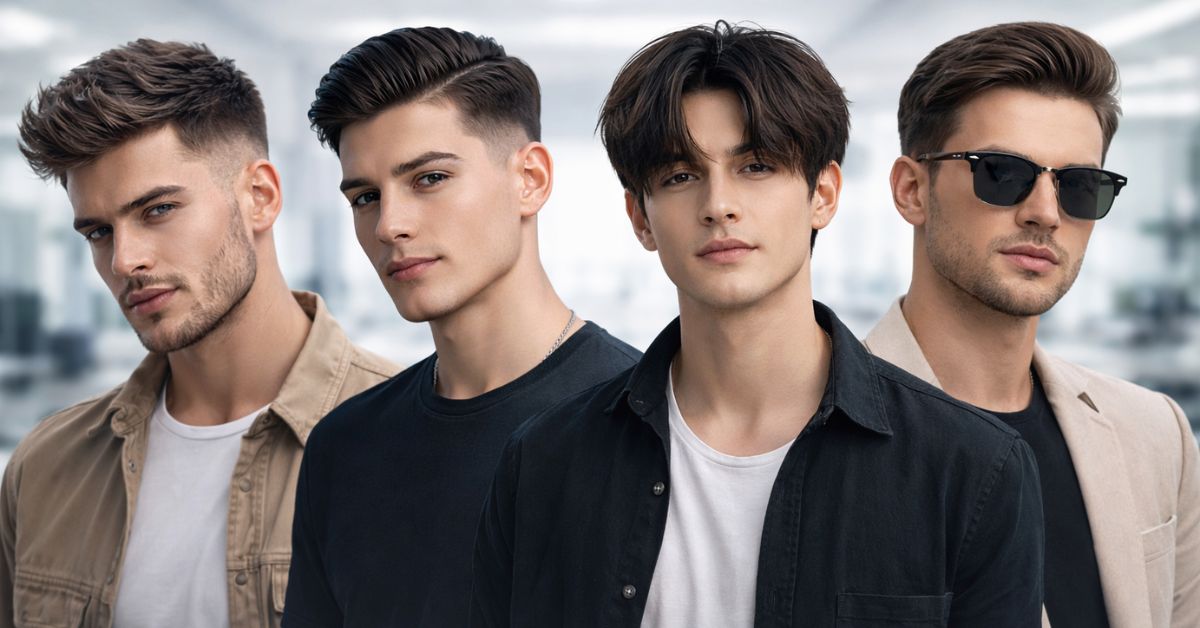
Men with straight hair have many styling options. This hair type is smooth, easy to manage, and naturally shiny. It works well with both classic and modern haircuts. From short fades to longer textured styles, straight hair can handle it all.
But choosing the right hairstyle is not always easy. A bad cut can make hair look flat or boring. The right style can completely change your look. That’s why finding the best haircut for your face shape and lifestyle matters.
In this guide, you’ll find the 40 best hairstyles for men with straight hair for 2026. These styles are trendy, practical, and barber-approved. Whether you like clean, messy, or professional looks, there’s something here for you.
Understanding Straight Hair Texture
Straight hair grows flat and smooth from the scalp. It has little to no natural wave or curl. This makes it easy to comb and style every day. However, it can lose volume fast if the cut is wrong. The right haircut adds shape and movement.
The 2026 Trend Shift: From Flat to Textured
In 2026, flat hairstyles are going out of style. Textured cuts are taking over. Barbers now use layers, point cutting, and light fades to add depth. These styles make straight hair look fuller and more modern. Texture also makes styling quicker and more flexible.
Which Straight Hairstyle Makes You Look Younger?
Youthful hairstyles add volume and soft texture. Messy crops, textured quiffs, and light fringes work very well. Avoid heavy side parts or overly slick styles. A relaxed, natural finish always looks fresher and younger.
40 Best Hairstyles for Straight Hair in 2026
1. The Modern Crew Cut
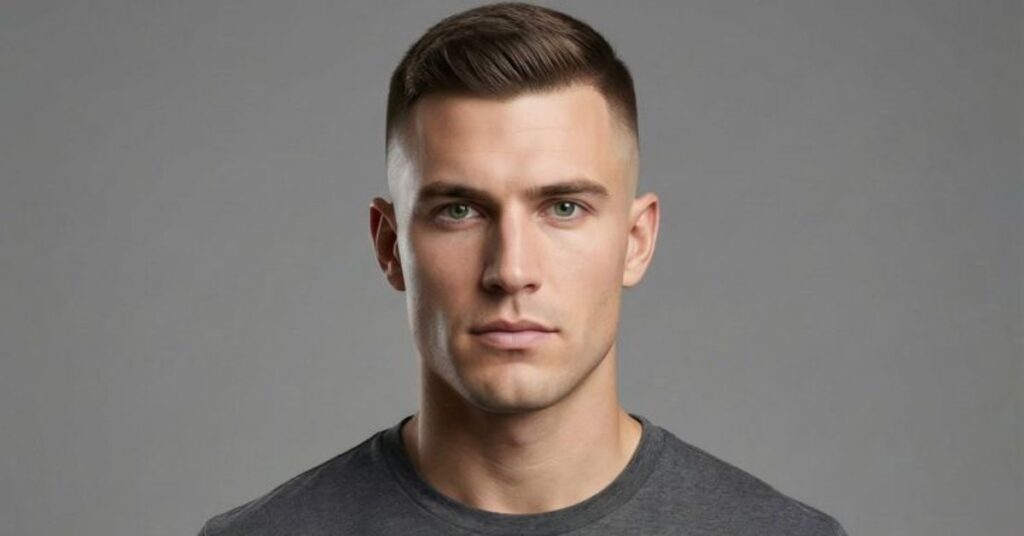
The Modern Crew Cut is a sharp, military inspired haircut updated for 2026 with high tapered sides and a slightly textured top. Unlike the traditional flat crew cut, this version uses fade technology, typically a mid to high fade to create a clean contrast between the closely clipped sides and the slightly longer top (usually 1 to 2 inches). The top hair is often styled forward or slightly to the side using a matte clay for a natural, contemporary finish.
BEST FOR: All face shapes, especially oval and square. Works especially well for men with naturally thick, straight hair because the tight sides prevent bulk buildup.
STYLING TIP: Apply a pea-sized amount of matte clay to damp hair and style with your fingers for a natural, non greasy hold. For men with a larger forehead, leave a little extra length at the front to create a subtle fringe that balances proportions.
MAINTENANCE: Every 3–4 weeks
RECOMMENDED PRODUCT: Matte Clay or Fiber Paste (light to medium hold)
2. Classic Ivy League Cut
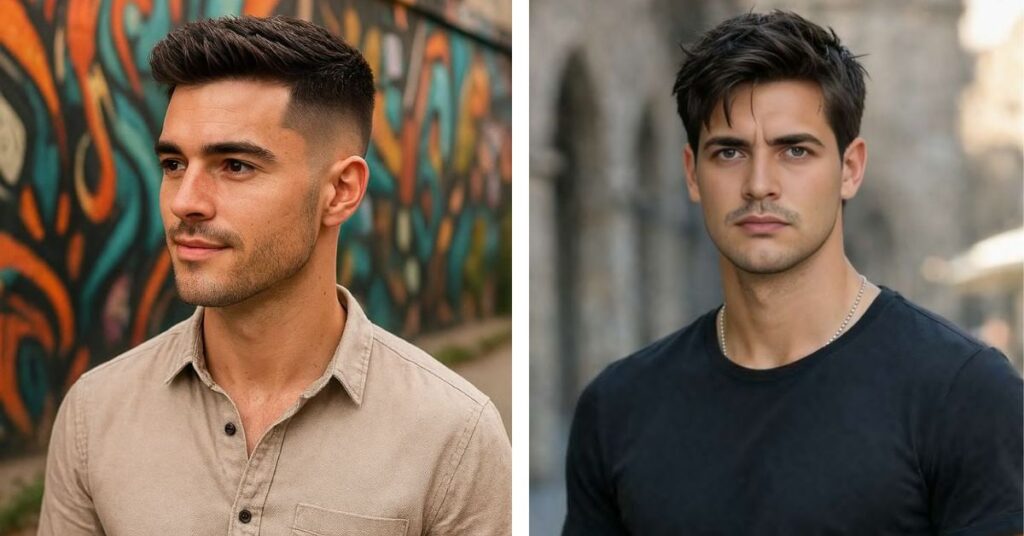
Often called the Harvard Clip, the Ivy League Cut is a refined, preppy evolution of the crew cut. It is slightly longer on top, typically 2 to 3 inches which gives enough hair to create a clean side part. The sides are tapered, not faded, maintaining a more conservative, polished profile. This cut has been a staple of boardrooms and campus quads for decades, and in 2026 it remains the gold standard of intelligent grooming.
BEST FOR: Oval and Diamond face shapes. The structured side part creates visual symmetry. Ideal for professional environments in law, finance, medicine, or academia.
STYLING TIP: Use a fine tooth comb and a light hold pomade to create a crisp, clean part on your preferred side. For the old money look trending in 2026, opt for a low shine finish rather than high-gloss.
MAINTENANCE: Every 4–5 weeks
RECOMMENDED PRODUCT: Light hold Pomade or Grooming Cream
3. Textured French Crop
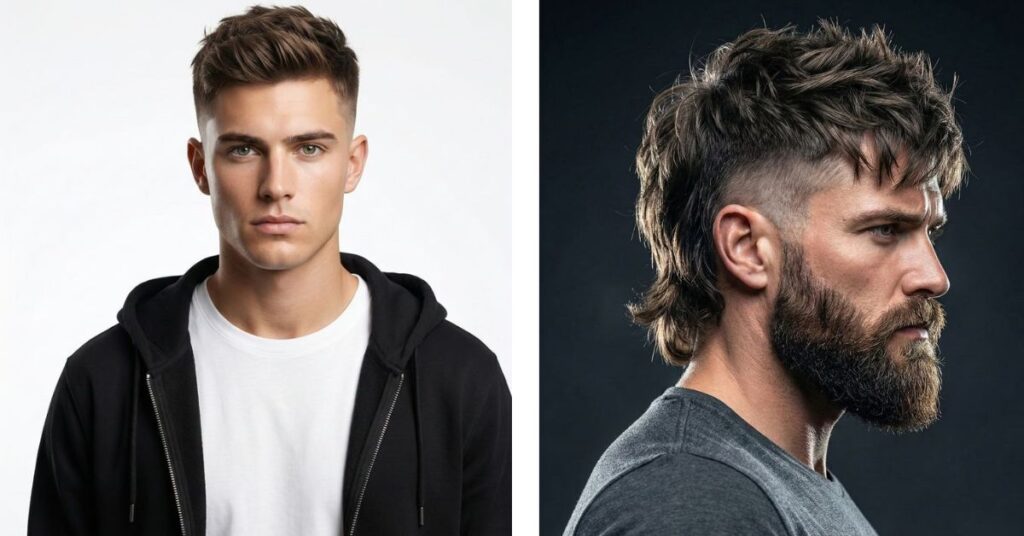
The Textured French Crop is arguably the most important haircut for men with straight hair in 2026. It features short to medium sides (typically a low or mid fade) paired with a textured, choppy top and a short fringe that falls just above the eyebrows. The critical difference from a standard crop is the point cutting technique used by the barber scissors are held at an angle to remove bulk and add internal movement to straight strands, preventing the flat, lifeless look that straight hair can suffer from.
BEST FOR: All face shapes. Especially effective for men with fine, straight hair who struggle with volume. Also excellent for men with round faces, as the fringe shortens the visual length of the face.
STYLING TIP: The secret weapon is Texture Powder. Apply a small pinch to the roots of towel dried hair, then scrunch the top upward with your fingers. This lifts the hair without weighing it down, creating the volume that straight hair naturally lacks.
MAINTENANCE: Every 4–6 weeks
RECOMMENDED PRODUCT: Texture Powder (root lift) + Light Matte Clay (finishing)
4. High and Tight
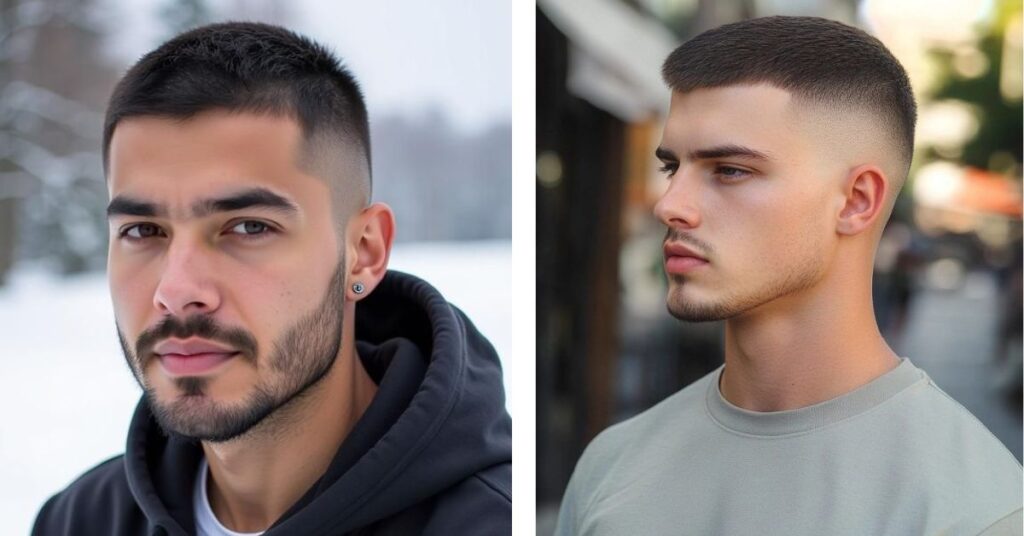
A military grade favorite that has moved from barracks to mainstream. The High and Tight features sides shaved very close to the skin starting almost at the crown level leaving only a small, defined patch of hair on top of the head. The top patch typically ranges from a close #2 clip all the way to a full inch of length, giving you the flexibility to dial in exactly how severe or subtle you want the overall look to feel. In 2026, barbers are adding a subtle skin fade at the temples to soften the harsh military line.
BEST FOR: Oval, square, and diamond face shapes. Best suited for men with active lifestyles, outdoor careers, or those who want zero daily styling effort.
STYLING TIP: No product is typically needed. However, if you want to define the top patch, a tiny amount of matte paste pressed into the hair with your fingertips gives it a clean, intentional look.
MAINTENANCE: Every 10–14 days (high maintenance the fade grows out quickly)
RECOMMENDED PRODUCT: Optional: Light Matte Paste for definition
5. The Modern Caesar Cut
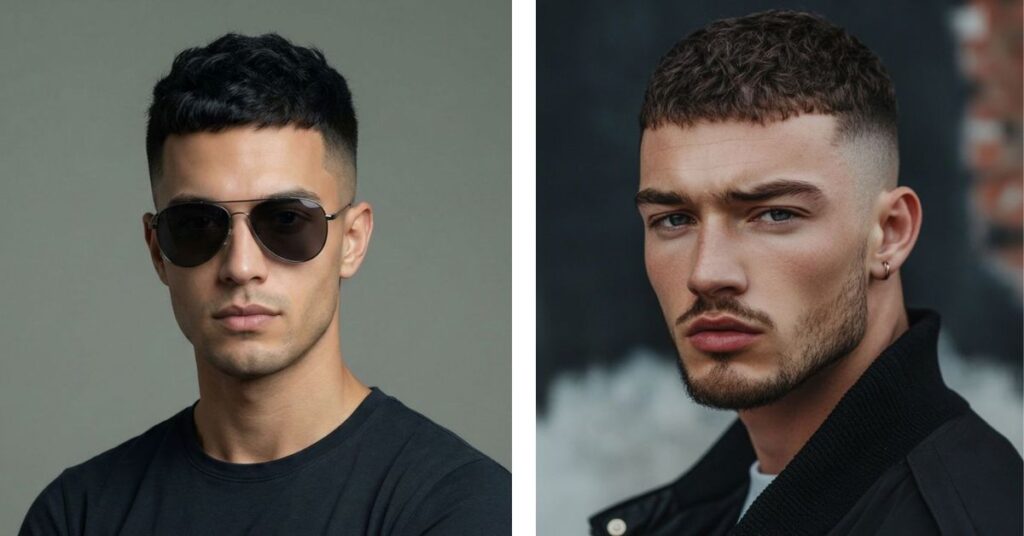
Inspired by the ancient Roman emperor, this cut features a uniform length of approximately 2 to 3 inches across the top with a defining characteristic: horizontally cut, straight across bangs that rest flat on the forehead. The 2026 modernization adds a subtle fade on the sides of either a mid or high skin fade which contrasts beautifully with the blunt, forward fringe. The overall effect is structured, masculine, and surprisingly versatile.
BEST FOR: Men with straight, fine hair benefit the most, as the blunt fringe appears thick and deliberate. Also excellent for men with slightly receding hairlines the forward fringe camouflages the hairline effectively.
STYLING TIP: Blow dry the fringe forward and downward with a flat paddle brush. Finish with a light, flexible wax pressed into the fringe to keep it lying flat and uniform throughout the day.
MAINTENANCE: Every 4–5 weeks
RECOMMENDED PRODUCT: Light Wax or Flexible Paste
6. Edgar Haircut
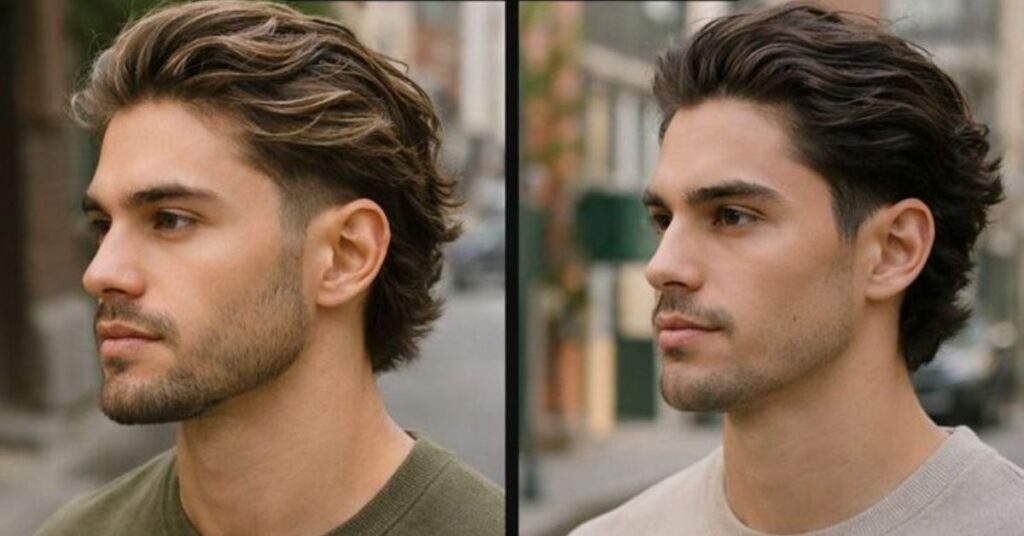
The Edgar is one of the most culturally distinctive haircuts of the 2020s. It originated in Latin American barbering culture and is characterized by a blunt, perfectly straight fringe cut horizontally across the forehead, combined with a high skin fade that begins very close to the top of the head. The visual effect is geometric and sharp; a hard horizontal line across the top meets the nearly invisible fade on the sides, creating a look that is simultaneously modern, urban, and bold.
BEST FOR: Strong, angular face shapes (square, diamond). Best for men with thick, straight hair, as the hair must have enough density to hold the sharp horizontal line without breaking.
STYLING TIP: Ask your barber specifically for a high skin fade with a blunt line; these are the two non negotiable elements. At home, use a strong-hold clay to keep the fringe crisp and prevent any pieces from falling out of alignment.
MAINTENANCE: Every 2–3 weeks (the high fade and blunt fringe require frequent touch ups)
RECOMMENDED PRODUCT: Strong Hold Matte Clay
7. Burr Cut with Line Up
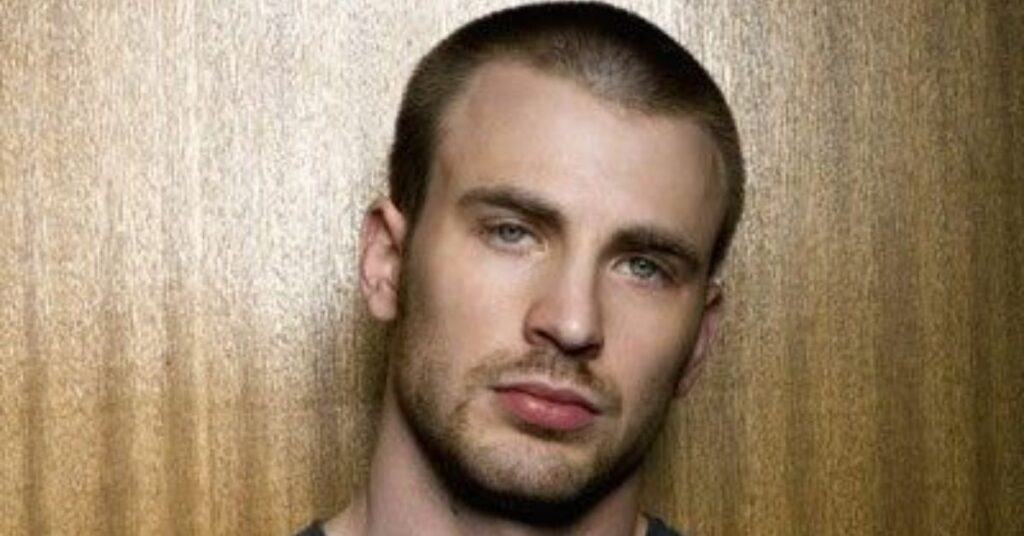
The Burr Cut keeps every part of the head at one consistent length usually somewhere between a quarter and half an inch clipped evenly from the front hairline all the way to the neckline. What transforms this from a basic buzz cut into a refined style is the Line Up, a process where the barber uses a straight razor or detailer to create a perfectly sharp, geometric perimeter around the forehead, temples, and neckline. This precise edge defines the face shape and makes the overall look appear much more intentional and premium.
BEST FOR: Round and oval face shapes benefit the most, as the sharp, squared-off edges of the line up add angles to softer facial structures. Ideal for men with very thick straight hair who want to minimize bulk completely.
STYLING TIP: No product is needed for this cut. To prolong the sharpness of the line up, apply a small amount of edge control or firm gel along the hairline immediately after barbering.
MAINTENANCE: Every 2–3 weeks
RECOMMENDED PRODUCT: Edge Control Gel (for hairline maintenance between visits)
8. Skin Fade with Textured Top
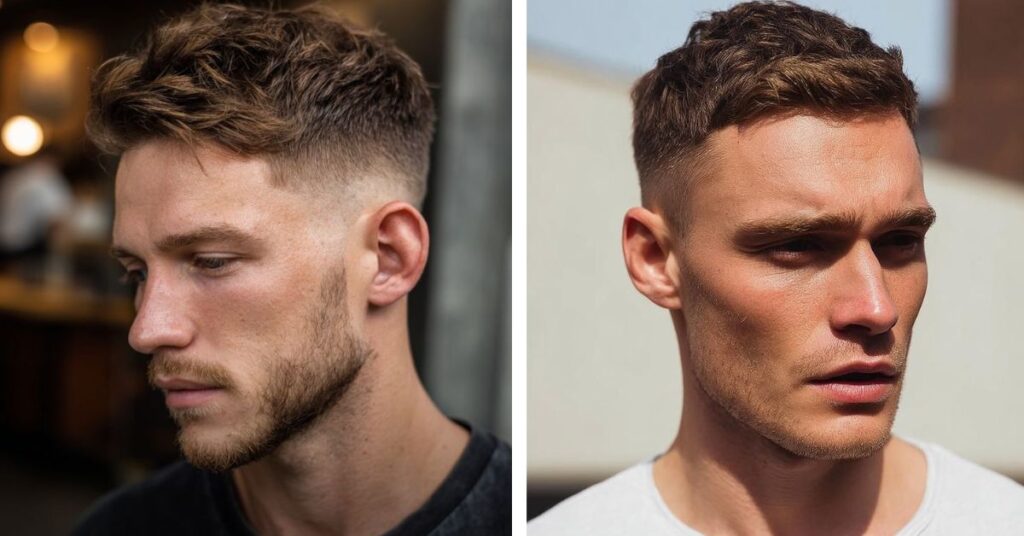
One of the most popular haircuts globally in 2026. The sides are faded down to the skin (zero guard), creating a seamless disappearance of hair. The top is left at a medium length (2 to 4 inches) and cut using point cutting or razor texturizing techniques that add movement and separation to straight strands. The result is a cut where the hair naturally looks fuller and more dynamic on top, despite straight hair’s tendency toward flatness.
BEST FOR: All face shapes. This is a universally flattering cut. It particularly benefits men with very straight, fine hair because the textured top visually increases density.
STYLING TIP: After showering, rough dry with a blow dryer on medium heat while tousling the hair with your fingers. Apply a fingertip sized amount of matte clay and work it through the top, defining sections for a piece-y, separated texture. Avoid combing to keep the finish natural.
MAINTENANCE: Every 3–4 weeks
RECOMMENDED PRODUCT: Matte Clay or Fiber Paste
9. Butch Cut for Straight Hair
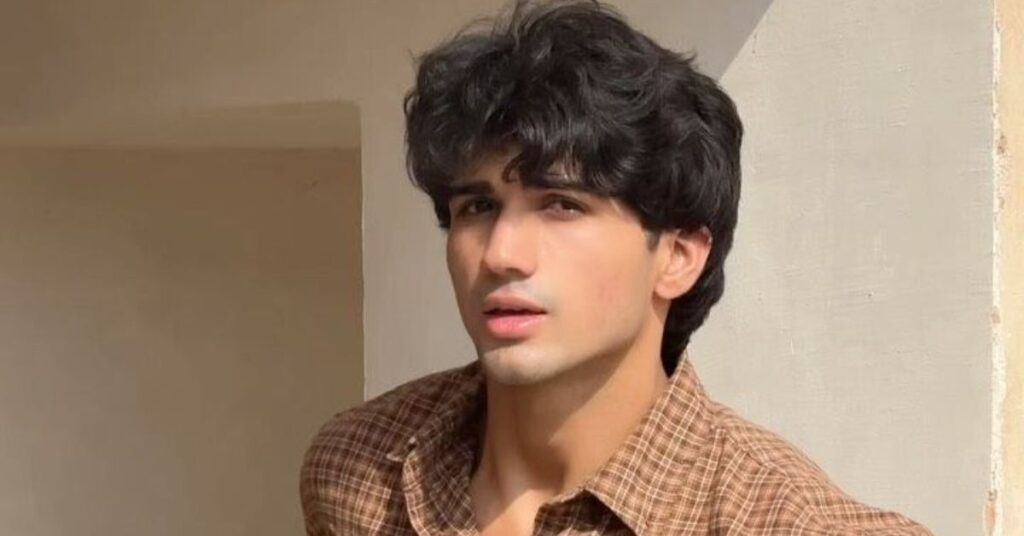
The Butch Cut is a utilitarian, uniform-length clipper cut typically done with a #3, #4, or #5 guard all over the head. Unlike the shorter Burr Cut, the Butch Cut has enough length (approximately half an inch to three quarters of an inch) to show the natural direction and slight texture of the hair. It frames the face cleanly without requiring any daily styling. For men with straight hair, the naturally smooth strands lie uniformly at this length, creating an effortlessly neat appearance.
BEST FOR: Men with active, outdoor lifestyles. Works across all face shapes. Particularly well suited for men with very thick, dense straight hair who want to reduce bulk completely.
STYLING TIP: Ask your barber to taper (not fade) the neckline and sideburns for a slightly elevated finish. This subtle refinement separates a Butch Cut from a generic buzz cut.
MAINTENANCE: Every 3–4 weeks
RECOMMENDED PRODUCT: None required. Optional: Light pomade for a slightly polished finish.
10. Blunt Fringe Style
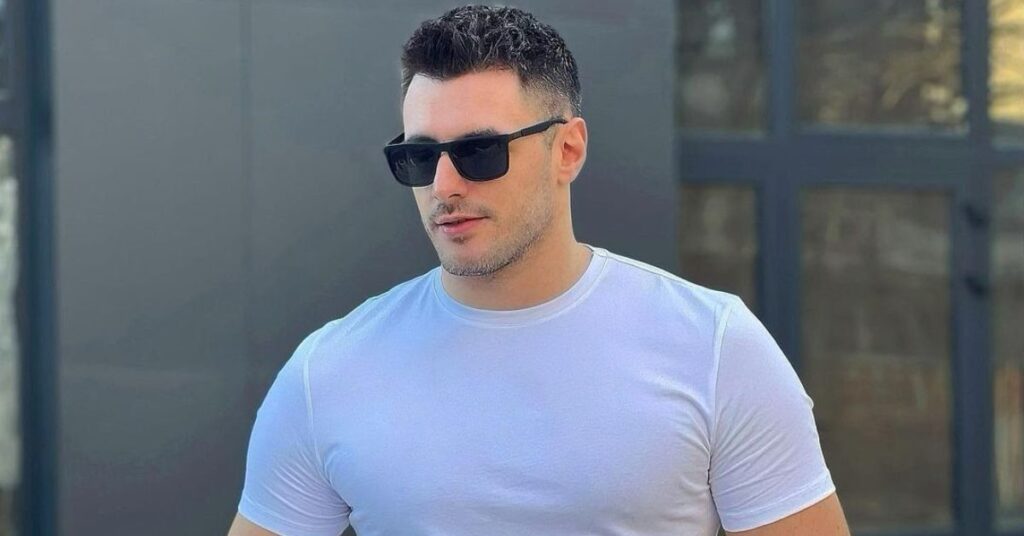
The Blunt Fringe Style embraces the natural forward-falling behavior of straight hair by cutting it into a heavy, straight-across fringe that rests just above or at the eyebrows. The sides can be worn with a subtle taper, a mid fade, or left slightly longer for a more shaggy effect. This style deliberately works with straight hair’s natural weight and direction, rather than fighting it which is why it requires minimal daily effort to maintain.
BEST FOR: Men with round, square, and oblong face shapes. The straight-across fringe visually shortens longer faces and adds width to narrower ones. Best for men with medium to high density straight hair.
STYLING TIP: Blow dry the fringe forward and downward, using your fingers to press it flat. A light hold cream or texturizing spray will keep the fringe laying naturally without making it stiff or plastic looking.
MAINTENANCE: Every 5–6 weeks
RECOMMENDED PRODUCT: Texturizing Spray or Light Hold Cream
11. Modern Slick Back
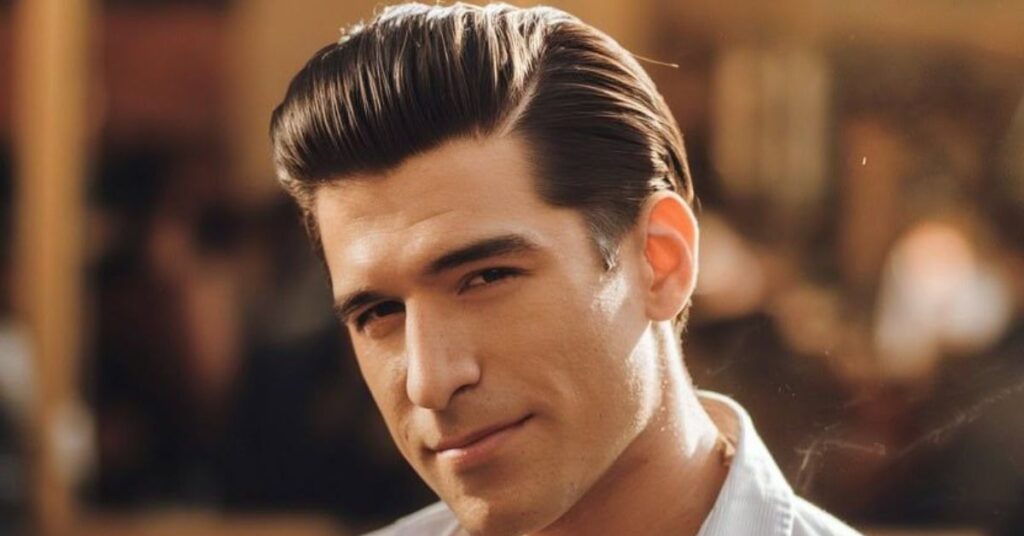
The Slick Back has existed since the 1920s, but the 2026 version is a significant departure from the heavy, greasy iterations of the past. The modern approach focuses on matte and airy hair swept directly backward from the forehead with a slight lift at the front and allowed to flow naturally toward the back of the head. The sides are typically paired with a low to mid fade. The overall effect is sleek and intentional without looking dated or over styled.
BEST FOR: Oval, square, and oblong face shapes. Ideal for men with medium to long straight hair who want a sharp, put-together appearance. Best for men with naturally smooth, frizz-free straight hair.
STYLING TIP: The blow-drying step is essential. Use a vented brush while blow-drying to lift the hair back and off the forehead, creating the airy flow. Apply a medium-hold, low-shine pomade or styling cream while the hair is 80% dry, and do a final cool-air blast to lock the shape in place.
MAINTENANCE: Every 4–5 weeks
RECOMMENDED PRODUCT: Medium Hold Low Shine Pomade or Styling Cream
12. Classic Side Part Evolution
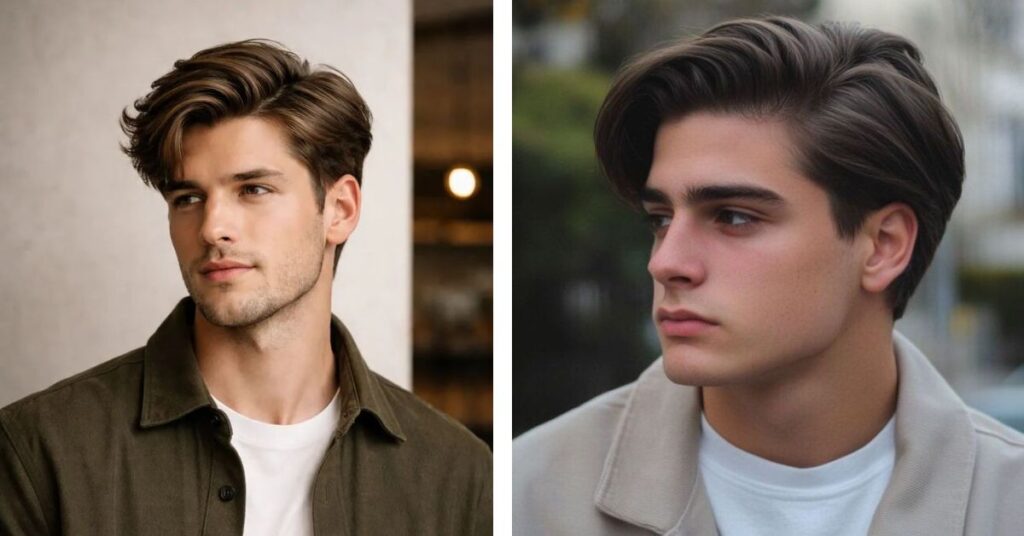
The traditional side part has been thoroughly modernized for 2026. The updated version retains the defining characteristic (a clean lateral part on one side) but adds significantly more length on top (3–4 inches) and uses a softer, more gradual taper on the sides rather than a sharp fade. The hair above the part flows with more natural volume and movement, and the finish is low shine rather than high gloss, creating a look that bridges the gap between classic elegance and contemporary ease.
BEST FOR: Square and Heart face shapes, where the structured side part adds definition and symmetry. Excellent for professional settings legal, financial, and corporate environments.
STYLING TIP: Use a fine-tooth comb to create a clean part while the hair is still damp. Apply a light grooming cream and blow dry the top away from the part for natural volume. Finish with a light, non stiff hairspray to hold the part without looking overworked.
MAINTENANCE: Every 4–5 weeks
RECOMMENDED PRODUCT: Light Grooming Cream + Optional Light Hold Hairspray
13. High Volume Pompadour
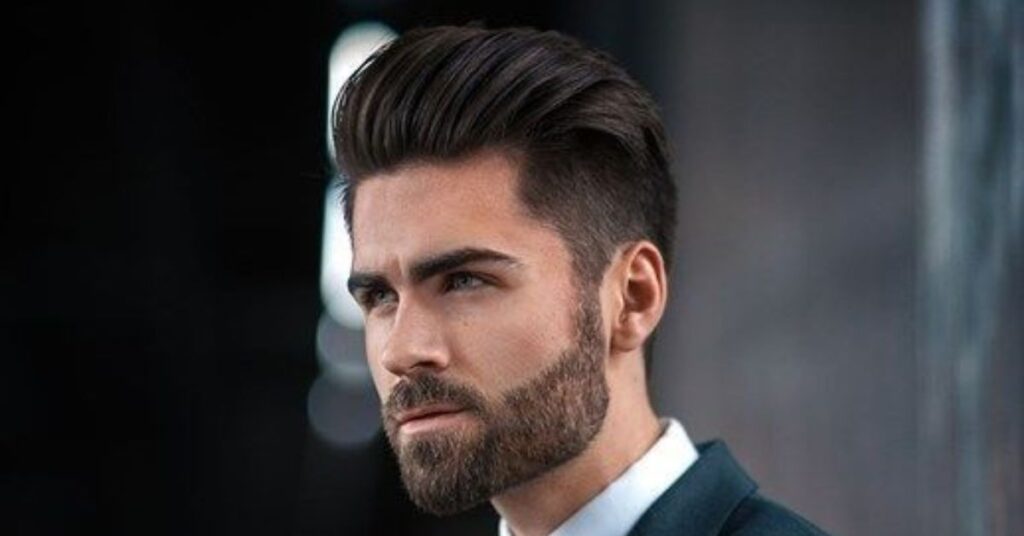
The Pompadour is one of the most architecturally ambitious hairstyles a man can wear. The modern version features the front section swept upward and backward, creating a dramatic vertical volume ranging from 2 to 4 inches above the forehead. The sides are typically paired with a mid to high skin fade, creating a sharp contrast between the bold elevated top and the clean sides. For men with straight hair, achieving this height requires deliberate blow-drying technique.
BEST FOR: Oval and oblong face shapes, where the vertical volume adds proportion. Best for men with thick, straight hair that has sufficient density to hold the height throughout the day.
STYLING TIP: Apply a heat protectant first. Use a round brush to lift the front section upward at the roots while blow drying, building height as you go. While still warm, apply a medium to strong hold pomade. Use a fine tooth comb to refine the shape. A light mist of hairspray provides a final layer of hold without stiffening the hair.
MAINTENANCE: Every 4–5 weeks, with daily styling required
RECOMMENDED PRODUCT: Medium to Strong Hold Pomade + Optional Light-Hold Hairspray
14. Textured Quiff
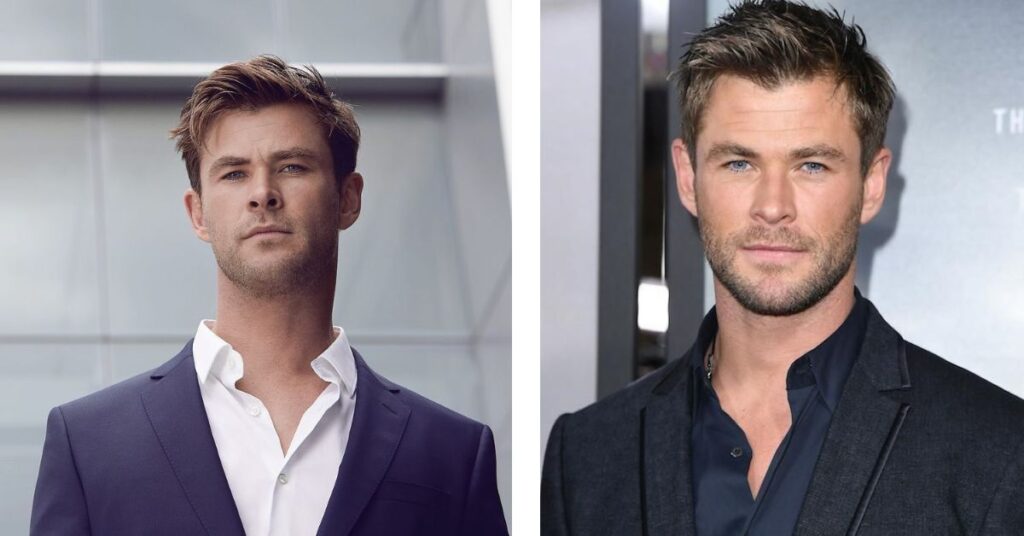
The Textured Quiff is the more relaxed, artistically undone cousin of the pompadour. Where the pompadour is structured and deliberate, the quiff is intentionally disheveled; the front hair is swept upward and slightly to one side, but left with visible texture, separation, and movement rather than a smooth, uniform surface. This makes it significantly easier to style than a pompadour, and the result is a contemporary, fashion forward look that reads as both stylish and effortless.
BEST FOR: All face shapes. Particularly effective for men with thin or fine straight hair, as the internal texture created by styling products adds visual bulk. Excellent for men in creative industries design, media, fashion, and tech.
STYLING TIP: Apply a sea salt spray to damp hair first, then rough dry with your fingers (not a brush) until approximately 80% dry. Apply a medium-hold matte clay by working it through the top section, then push the front upward and to the side with your palm. Do not over refine the imperfections are the point.
MAINTENANCE: Every 5–6 weeks
RECOMMENDED PRODUCT: Sea Salt Spray + Matte Clay
15. The Two Block Cut

The Two Block Cut originated in South Korean barbering culture and has become a global phenomenon. The name describes its structure: Block One is a long top section (typically 3–5 inches) left at its full length, and Block Two is the sides and back, which are cut very short either clipped with a low guard or faded to the skin. There is a deliberate, dramatic contrast between the two sections with no gradual blending. For men with straight hair, the long top falls naturally forward or to the side, and the absence of heavy sides means the top does not become weighed down.
BEST FOR: Asian hair types with straight, thick growth patterns benefit enormously from this cut, as it was specifically designed with that hair texture in mind. Works best with oval and heart face shapes.
STYLING TIP: Apply a small amount of light cream or low hold pomade to the top section and style forward, to the side, or as curtain bangs. The natural weight of straight hair means very little product is needed. The cut does the structural work.
MAINTENANCE: Every 4–6 weeks
RECOMMENDED PRODUCT: Light Styling Cream or Low Hold Pomade
16. Korean-Inspired Comma Hair

The Comma Hair is a precise styling technique not just a cut that originated in South Korean beauty culture. The name comes from the shape of the styled fringe: the front section of the hair is styled to curve inward at the ends, creating a shape resembling the punctuation mark (,). The fringe is typically medium length (reaching mid forehead to brow area) and the rest of the hair can be worn in a Two Block cut, a light layer cut, or simply left at medium length.
BEST FOR: Works specifically with straight hair the style is nearly impossible to achieve on curly or wavy hair without chemical straightening. Best for men with oval or heart face shapes and medium density hair.
STYLING TIP: Blow-dry the front section inward point the dryer nozzle downward and rotate a round brush so the ends of the fringe curl inward toward the face. Once the shape is set with heat, lock it with a light hold styling cream or low-shine pomade.
MAINTENANCE: Every 5–6 weeks, with 5–10 minutes of daily styling
RECOMMENDED PRODUCT: Round Brush + Blow Dryer + Light Styling Cream
17. Modern Mullet with Straight Hair

The mullet is back, and this time it actually looks good. The 2026 Modern Mullet bears little resemblance to its 1980s predecessor. The sides are neatly tapered or lightly faded, the top is styled forward or with texture, and the back is grown to a medium length (touching the collar or slightly below) and layered to add movement. For men with straight hair, the natural weight of the back section creates an elegant, flowing silhouette.
BEST FOR: Oval and oblong face shapes. Best for men in creative industries or those with a strong personal style identity. Works exceptionally well with straight hair due to the elegant flow of the back section.
STYLING TIP: Apply a texturizing salt spray to the entire head while damp, then rough-dry. Style the top forward or to the side with matte clay, and allow the back to air-dry naturally for a relaxed flow. To add definition to the back, apply a small amount of sea salt spray and scrunch gently.
MAINTENANCE: Every 5–7 weeks
RECOMMENDED PRODUCT: Sea Salt Spray + Matte Clay
18. Faux Hawk (Foahawk) Modern
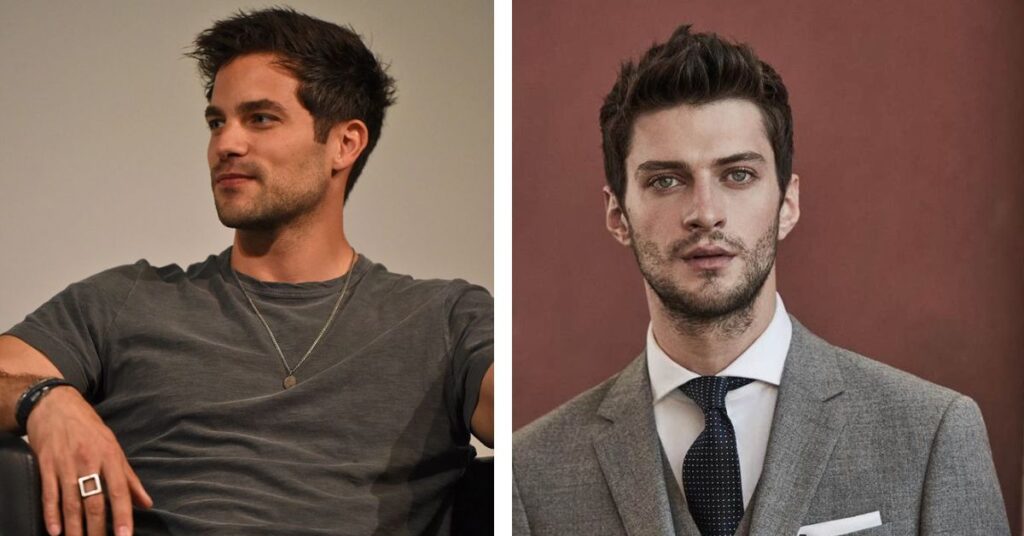
The Faux Hawk gives the bold visual impression of a Mohawk without the permanent commitment of shaving the sides. The sides are faded (typically a mid to high skin fade), and the hair on top of the head is pushed inward from both sides toward the center, creating a raised central ridge running from the front to the back of the head. Unlike a true Mohawk, the side hair is not shaved, it is trained upward and inward through product and styling. For men with straight hair, the naturally smooth strands create a clean, sharp central ridge.
BEST FOR: Oval and diamond face shapes. Excellent for men who want a bold, high energy look for social settings but need a more conventional style for professional environments the faux hawk can be deflated by simply not styling the sides inward.
STYLING TIP: Apply a strong hold matte clay to damp hair. Starting at the sides, push the hair inward and upward using your palms. Once the center ridge is formed, use your fingers to define and lift the central section. A light mist of flexible hold hairspray keeps the shape in place throughout the day.
MAINTENANCE: Every 3–4 weeks
RECOMMENDED PRODUCT: Strong-Hold Matte Clay + Flexible Hairspray
19. Asymmetrical Fringe
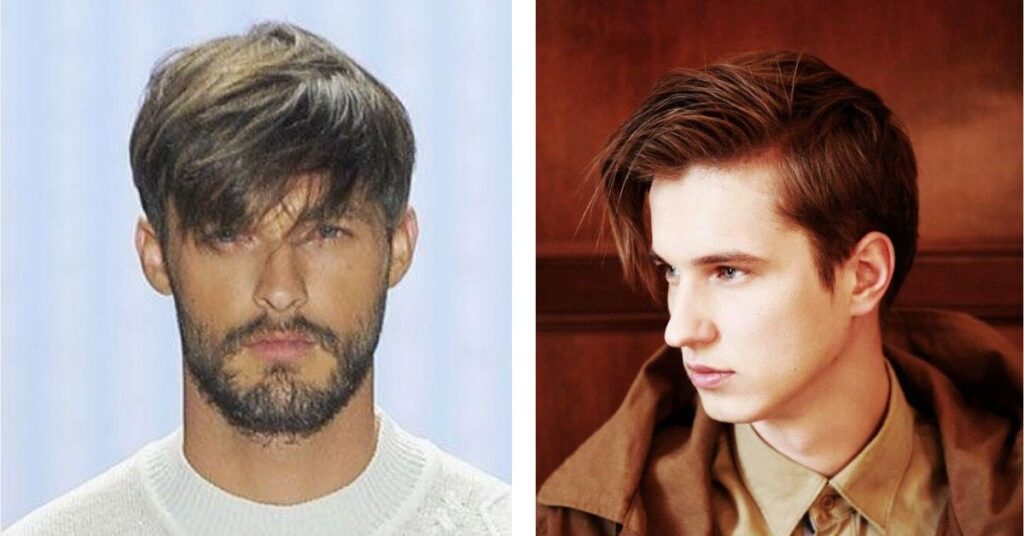
The Asymmetrical Fringe is a deliberately uneven hairstyle where one side of the fringe is cut significantly longer than the other, creating a diagonal line that sweeps across the forehead. This asymmetry introduces a strong visual dynamic into what might otherwise be a flat, straightforward straight-haired look. The longer side typically falls across one eye or sweeps to the side, while the shorter side exposes the forehead. The sides are usually paired with a subtle fade or taper.
BEST FOR: An effective technique for men with straight hair to add visual interest to their face shape without relying on curl or wave. Particularly useful for men with symmetrical or plain features, as the asymmetry creates a focal point.
STYLING TIP: Blow dry the fringe in the direction of the longer sweep using a flat paddle brush. Apply a light hold serum or cream to add shine and prevent any flyaways from disrupting the clean diagonal line. Avoid matte products here; a slight shine enhances the sleekness of the sweep.
MAINTENANCE: Every 4–5 weeks
RECOMMENDED PRODUCT: Light-Hold Serum or Smoothing Cream
20. Messy Straight Fringe

The Messy Straight Fringe embraces the natural forward movement of straight hair, allowing the front section to fall toward the forehead in a deliberately casual, layered way. The key is that while the look appears effortless, it is the result of a skilled cut; the fringe must be layered through point cutting to prevent it from falling as one flat, heavy sheet. The layers create the natural separation and movement that makes the style appear lived-in rather than simply unkempt.
BEST FOR: Men in their teens through early 30s. Works for all face shapes. Ideal for men with medium density straight hair who want a low-maintenance, casual style that suits both relaxed and semi-professional settings.
STYLING TIP: After showering, towel dry without brushing or combing. Apply a small amount of texturizing spray to the damp front section and allow it to air dry naturally. The goal is to let the hair dry in its most natural state; slight movement and separation are signs of a successful result.
MAINTENANCE: Every 6–8 weeks
RECOMMENDED PRODUCT: Texturizing Spray (applied to damp hair)
21. Comb Over Fade
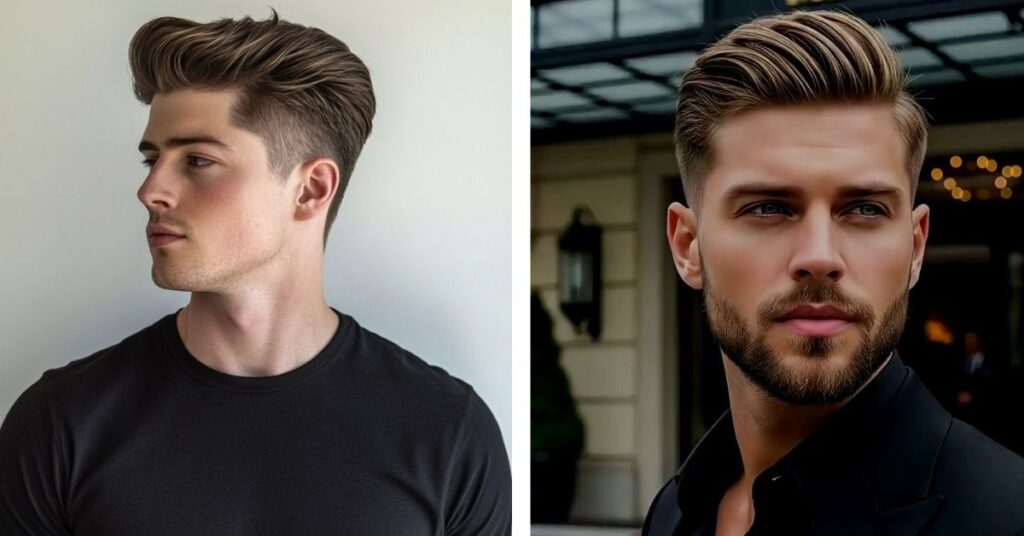
The Comb Over Fade bridges the traditional comb-over with the contemporary fade. The top is left long enough to sweep firmly to one side (typically 3–4 inches), while the sides feature a mid to high fade that graduates from skin to the longer top. The result is a clean, sharp profile with a strong directional sweep. This is one of the most versatile and transitional haircuts available for men with straight hair.
BEST FOR: All face shapes. Excellent for men growing their hair out who want to look intentional during the transition phase. Particularly effective for corporate and creative hybrid environments.
STYLING TIP: While the hair is damp, use a wide-tooth comb to establish the direction of the sweep. Apply a light-hold pomade or grooming cream and comb the top section firmly to one side. Blow-dry in that direction using a flat brush to lock the shape.
MAINTENANCE: Every 3–4 weeks
RECOMMENDED PRODUCT: Light Pomade or Grooming Cream
22. Shaggy Layers for Straight Hair
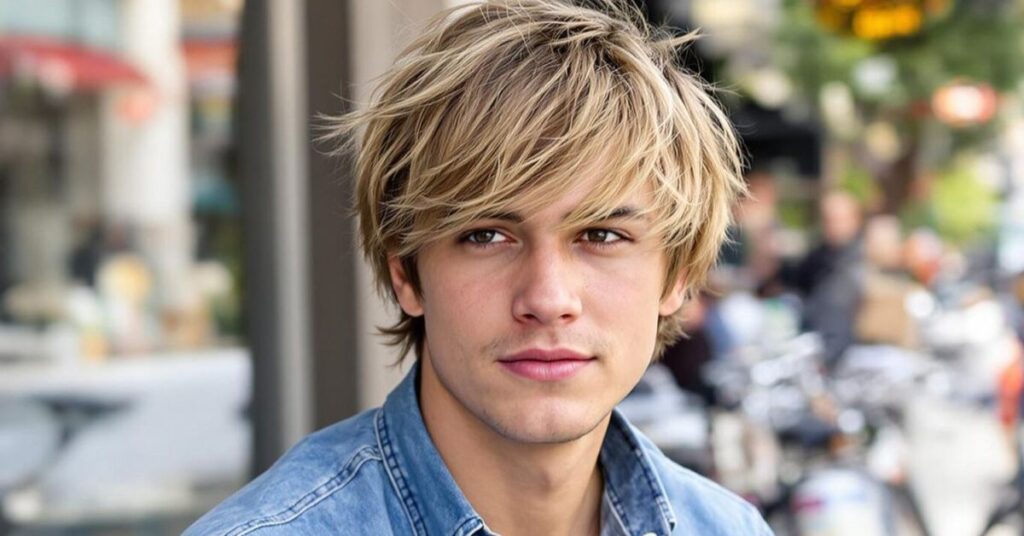
Shaggy Layers is the professional solution to straight hair’s most persistent problem: flatness. By having a stylist cut multiple internal layers at varying lengths using texturizing or razor cutting technique the overall weight of the hair is distributed unevenly, forcing it to move in different directions and creating the illusion of natural volume and dynamism. The surface appears slightly messy or shaggy in a deliberately stylistic way. This cut works at medium to long lengths.
BEST FOR: Men with medium to long straight hair who want to avoid the flat curtain effect that unbothered straight hair creates at longer lengths. Ideal for men in creative, artistic, or informal professional environments.
STYLING TIP: Layers work best when styled with a sea salt spray applied to damp hair. After rough drying with your fingers, the layers will separate naturally, creating visible movement. Avoiding brushing combing out layered straight hair defeats the purpose of the cut.
MAINTENANCE: Every 8–10 weeks (layers grow out slowly)
RECOMMENDED PRODUCT: Sea Salt Spray + Optional Light Matte Clay for piece-y definition
23. Surfer Hair Look
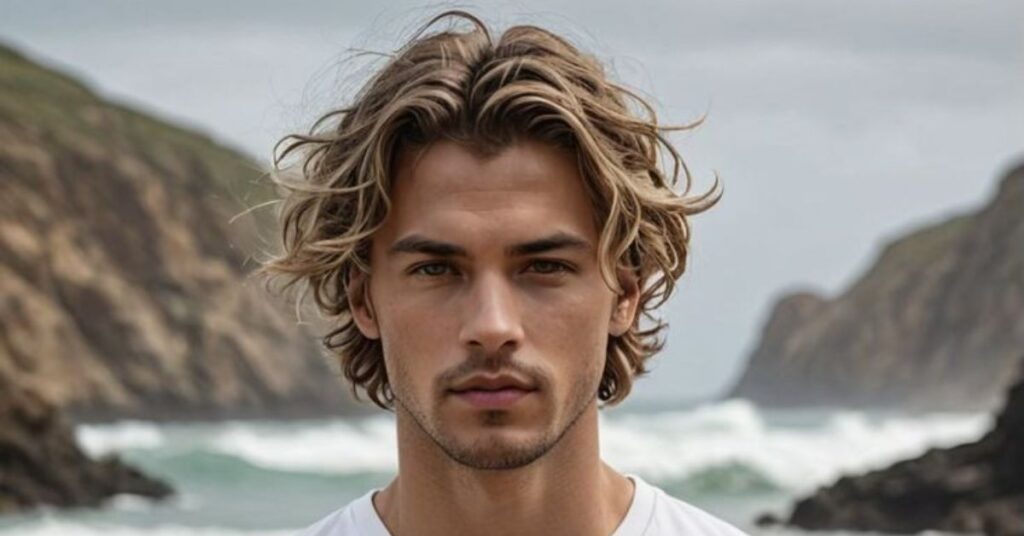
The Surfer Hair look replicates the effortlessly sun bleached, wind-tossed aesthetic of a coastal lifestyle. The hair typically reaches the chin, jawline, or slightly below the ear, with enough length to tuck behind the ears. Light internal layers prevent the hair from falling flat. The defining characteristic is that the texture of the hair should appear slightly gritty, with natural separation between sections, as if the person has just come in from the ocean.
BEST FOR: Oval and oblong face shapes. Works best for men with naturally fine to medium straight hair, as thicker hair can become too heavy at this length without aggressive thinning. Ideal for men in coastal, outdoor, or casual lifestyle settings.
STYLING TIP: The product secret is Sea Salt Spray applied while the hair is 80% dry. Hold the bottle 12 inches from the head and mist evenly, then scrunch upward with your palms rather than combing through. Allow to air-dry completely to create the oceanic grip that gives straight hair its surfer texture.
MAINTENANCE: Every 8–10 weeks
RECOMMENDED PRODUCT: Sea Salt Spray (the single most important product for this style)
24. Contemporary Man Bun
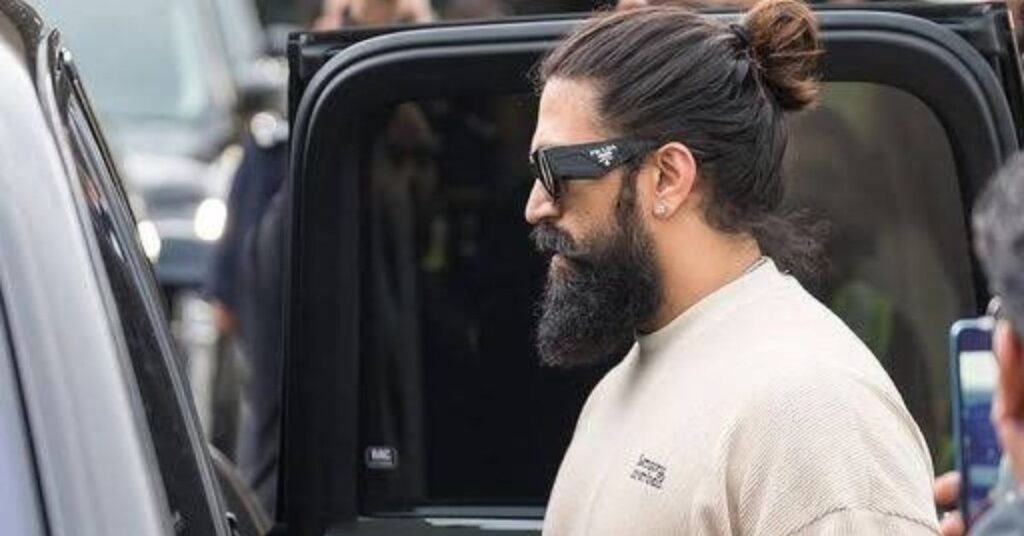
The Man Bun has evolved significantly since its mid-2010s peak. The 2026 Contemporary Man Bun is lower on the back of the head, slightly looser, and often paired with face-framing pieces or curtain bangs that are left out of the bun to soften the overall profile. For men with straight hair, the bun has a naturally sleek, polished appearance due to the smooth texture of the strands provided it is secured properly and not left visibly lumpy or uneven.
BEST FOR: Men with medium to long straight hair. Works for all face shapes. Ideal as a functional style for men who want to keep their length but need to manage it during physical activity, work, or social settings.
STYLING TIP: CRITICAL: Avoid tying the bun too tightly. Straight hair is particularly susceptible to traction alopecia hair thinning caused by repeated mechanical tension of tight styling. Use a soft fabric hair tie and tie the bun at the level where it sits most naturally on the back of the head.
MAINTENANCE: Hair needs to reach at least 6–8 inches for a reliable bun; trim every 10–12 weeks
RECOMMENDED PRODUCT: Light Smoothing Serum + Fabric Hair Tie
25. High Ponytail for Men
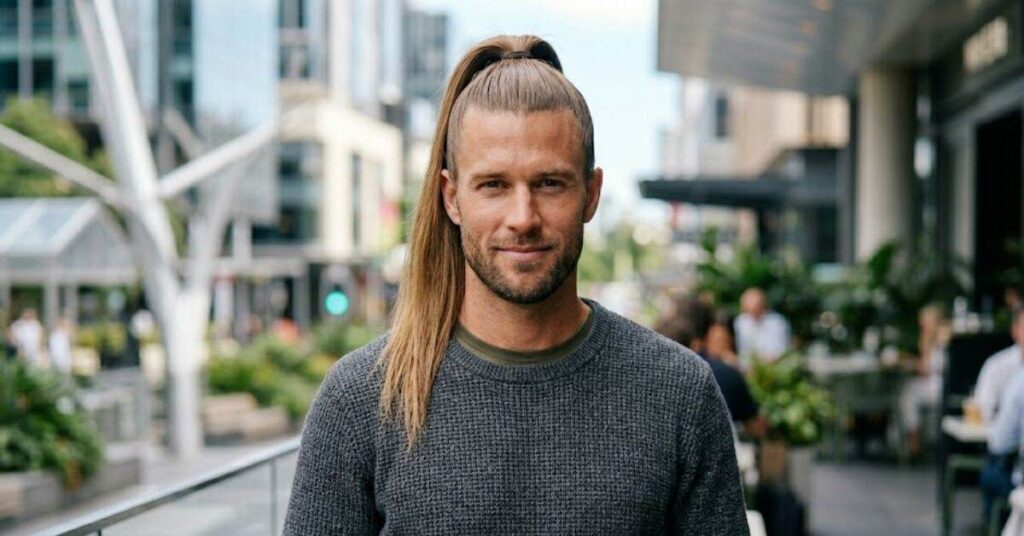
The High Ponytail for men is a fashion forward style that sits at the very crown of the head, secured tightly for a streamlined, elevated profile. Unlike the casual mid or low ponytail, the high ponytail is deliberate, sculptural, and bold; it elongates the neck, exposes the jawline fully, and creates a strong vertical line from the crown downward. For men with straight, frizz free hair, the smooth texture of straight strands creates a sleek, almost lacquer-like finish when pulled taut.
BEST FOR: Men with oval and oblong face shapes. Requires hair that is perfectly straight and frizz free for the best result. Best suited for men with strong, defined facial features since all of the face is exposed.
STYLING TIP: Start with completely dry, freshly washed straight hair. Apply a smoothing serum from root to tip, then brush with a firm bristle brush toward the crown. Secure with a strong elastic tie. For flyaway control, apply a tiny amount of pomade or wax along the hairline and smooth flat.
MAINTENANCE: Hair must be at minimum 8–10 inches; trim ends every 12 weeks
RECOMMENDED PRODUCT: Smoothing Serum + Strong Elastic Tie + Firm Bristle Brush
26. Long Slicked Back Style
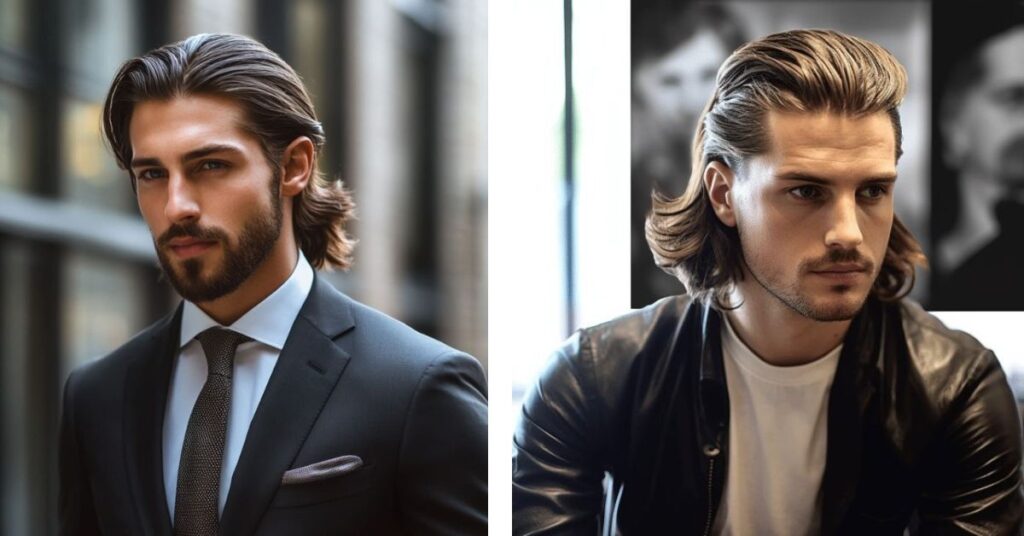
The Long Slick Back is the formal evening version of the casual slick back, extended to medium to long hair (typically touching or passing the ears).While damp, comb everything straight back or around a center part and let it air dry into a clean, natural flow that follows the shape of your head. The look is self consciously old Hollywood polished, deliberate, and sophisticated. For men with straight hair, this style achieves its most effective form because the naturally smooth texture prevents the frizzing or flyaways that would undermine the refined aesthetic.
BEST FOR: All face shapes at medium to long hair lengths. Whether it’s a wedding, a business dinner, or a black-tie night out, this is the go to formal style for men with straight hair.
STYLING TIP: Apply a light hold, medium shine pomade to wet hair and comb straight back with a fine-tooth comb. Avoid over applying a thin, even coating is sufficient. Allow air to dry rather than blow drying to maintain the smooth, natural flow of the hair.
MAINTENANCE: Hair must be at minimum 6–8 inches in length; trim every 10–12 weeks
RECOMMENDED PRODUCT: Light to Medium Hold Pomade with Natural or Medium Shine
27. Half-Up, Half-Down Bun
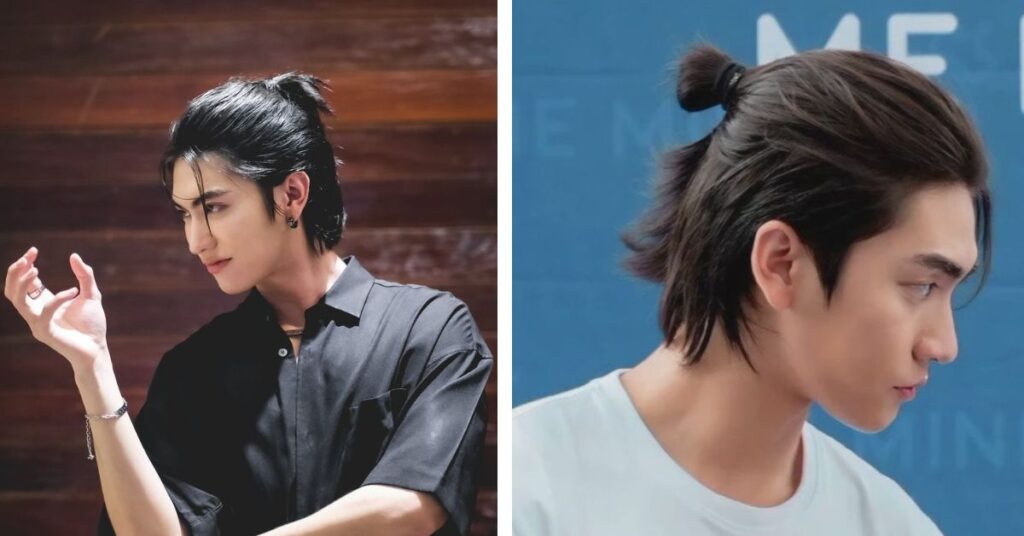
The Half Up, Half Down Bun takes only the top section of the hair from the crown to approximately the temples and secures it into a small bun or topknot at the back of the crown, while leaving the remaining hair to fall freely. This creates a style that simultaneously shows off the length and flow of the lower hair while keeping the top section contained and out of the face. In 2026, this style found cultural currency through the Urban Viking trend, blending a primal, masculine aesthetic with contemporary grooming sophistication.
BEST FOR: Men with medium to long straight hair (at least 6–8 inches overall) who want a style that transitions between casual and semi-formal settings. Works across all face shapes.
STYLING TIP: Separate the top section at a horizontal line from temple to temple. Tie this section into a small, tight bun at the crown using a fabric tie. Leaving the rest down the natural weight of straight hair creates an elegant, smooth lower section without additional product.
MAINTENANCE: No regular barbershop visits needed for the style itself; trim ends every 12 weeks
RECOMMENDED PRODUCT: Light Smoothing Serum for the lower section + Fabric Hair Tie
28. Shoulder Length Flow
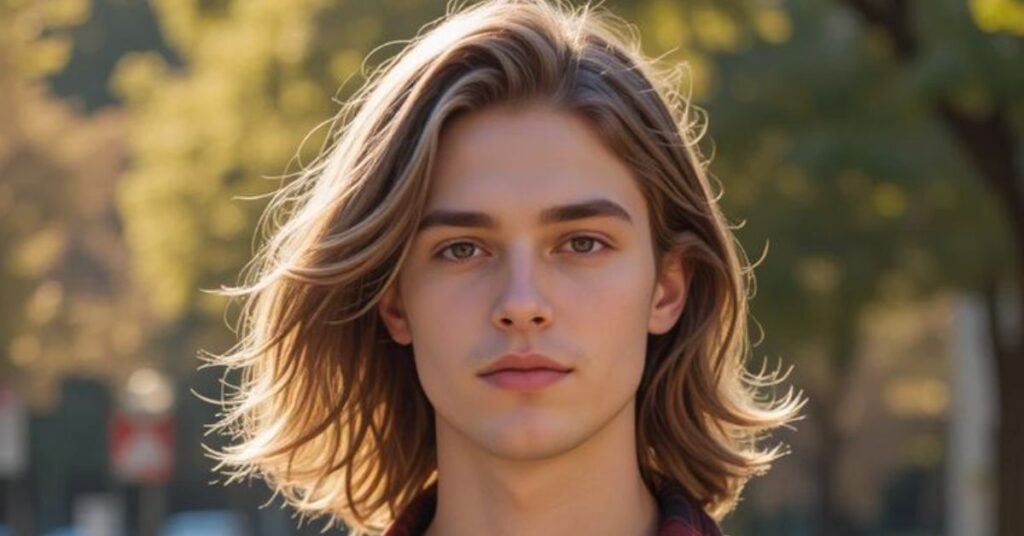
The Shoulder Length Flow, frequently called the Bro Flow in its full length iteration, refers to straight hair grown to shoulder length and left in its natural, downward flowing state with minimal styling intervention. At this length, men with straight hair experience the full expression of their hair type’s greatest asset: natural shine and smooth, elegant movement. When properly maintained with regular trims and conditioning, straight hair at shoulder length has a naturally luxurious quality that requires almost no styling effort.
BEST FOR: Oval and oblong face shapes, where the length does not overwhelm facial width. Men in creative, artistic, music, or outdoor professions. Best for men who genuinely want to commit to growing their hair long and maintaining it consistently.
STYLING TIP: At this length, the styling is minimal, the cut and health of the hair do all the work. Apply a light hair oil or serum to the mid lengths and ends while damp, and allow to air dry. Avoid brushing while wet. Occasional use of a wooden wide-tooth comb while dry will distribute natural oils and maintain the smooth, flowing appearance.
MAINTENANCE: Trim every 10–12 weeks (not for length, but to prevent split ends from traveling up the shaft)
RECOMMENDED PRODUCT: Hair Oil or Lightweight Serum (for moisture and shine) + Wide Tooth Wooden Comb
29. Long Top with Disconnected Undercut
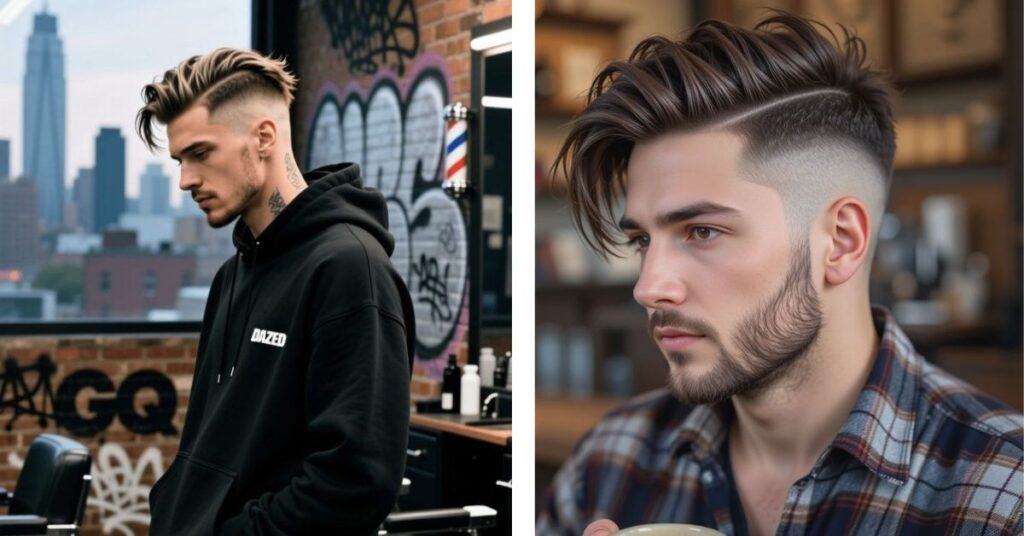
The Disconnected Undercut features a dramatic structural division: the sides and back are shaved or cut very short (often a zero or #1 guard), and there is no blending, tapering, or fading between the short sides and the significantly longer top. The top section typically 4–6 inches or more sits above the disconnected line. For men with straight hair, this structure is highly practical: the removal of the sides eliminates the heavy side growth that typically weighs down straight hair, allowing the top to move more freely.
BEST FOR: All face shapes. Particularly beneficial for men with very thick, dense straight hair, as the complete removal of the side and back hair dramatically reduces overall bulk. Excellent for men who want long hair but struggle with the heaviness of growing all sections simultaneously.
STYLING TIP: The top section can be styled in almost any direction forward, to the side, or swept back. Apply a medium hold matte paste or clay and use your fingers rather than a comb to style, maintaining natural separation and texture in the long top section.
MAINTENANCE: The shaved sides require professional touch ups every 2–3 weeks; the long top is trimmed every 10–12 weeks
RECOMMENDED PRODUCT: Medium Hold Matte Paste or Clay
30. Straight Hair Curtain Bangs
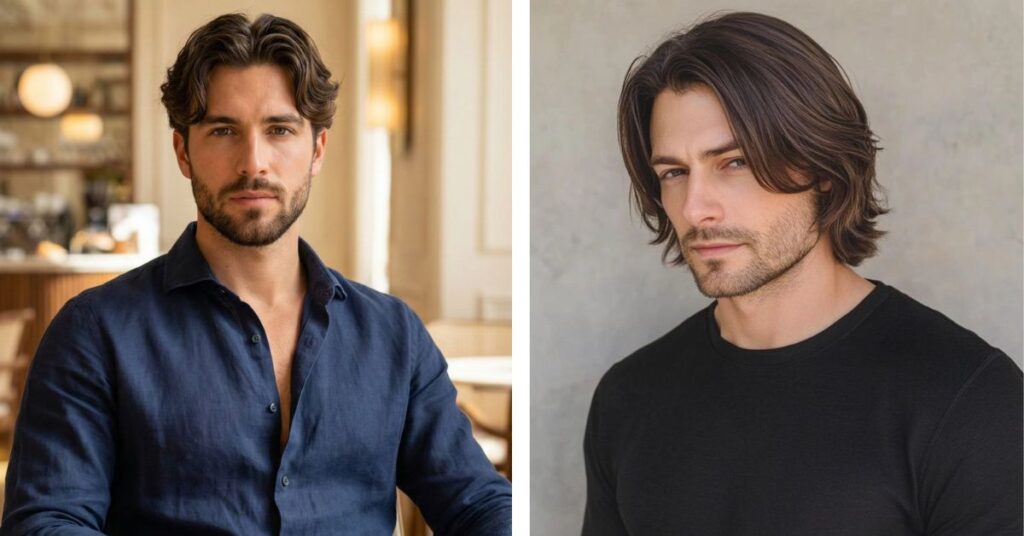
Curtain Bangs named for the way the hair parts like curtains from a central point are a 1990s inspired style experiencing a significant revival in 2026. The hair is parted down the middle at the forehead, and the front sections fall symmetrically to each side, framing the face. For men with straight hair, the natural weight and smoothness of the strands create an elegantly clean version; the curtains fall in perfect, symmetrical lines without the frizz or unpredictability that curlier hair types experience.
BEST FOR: Oval, oblong, and diamond face shapes. The symmetrical framing softens stronger jawlines and balances wider foreheads. Excellent for men who want to add face-framing elements to their style without committing to a full fringe.
STYLING TIP: Blow dry the front section with a round brush direct the left side to the left, and the right side to the right, both curving slightly inward toward the face at the ends. A light cream or low hold pomade keeps the curtain shape without flattening the movement.
MAINTENANCE: Every 5–6 weeks
RECOMMENDED PRODUCT: Light Hold Cream or Low-Shine Pomade + Round Brush
31. Low Taper Fade with Straight Top
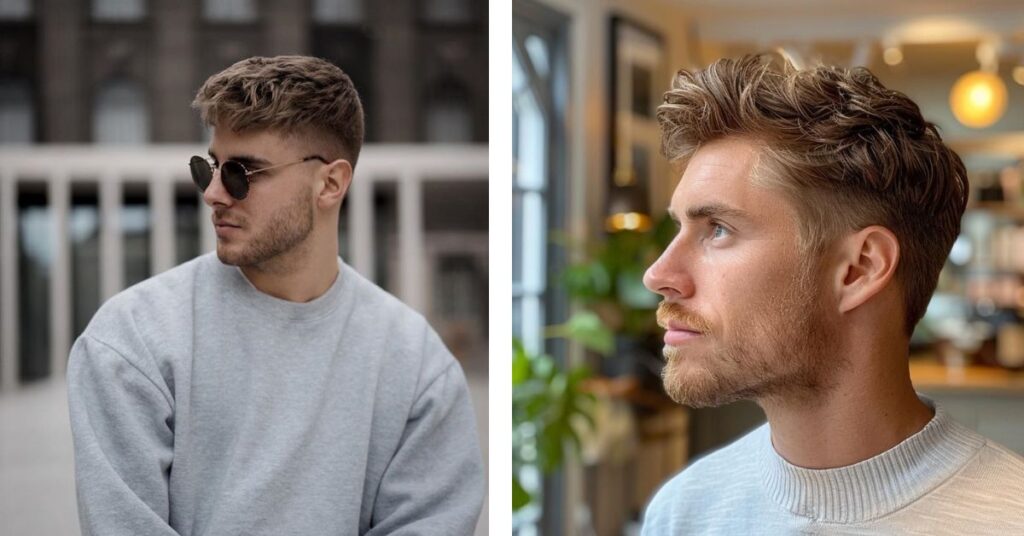
The Low Taper Fade is the most conservative and universally professional version of the fade haircut. Unlike mid or high fades that begin tapering at the temple or crown, the low taper begins only at the sideburns and neckline; the hair gradually shortens only in the final inch or two above the ear and at the back of the neck. The top is left at a natural length (typically 2–3 inches) and styled simply. The overall effect is a clean, slightly refined version of a natural haircut: polished without being trendy.
BEST FOR: All face shapes. This is the most workplace appropriate fade option, suitable for corporate, legal, medical, and conservative professional environments where more aggressive fades might be considered inappropriate.
STYLING TIP: A light hold pomade or grooming cream, applied sparingly and combed through the top, is all that is needed. The low taper does not shout for attention; the goal is a clean, maintained appearance rather than a bold statement.
MAINTENANCE: Every 4–5 weeks
RECOMMENDED PRODUCT: Light Pomade or Grooming Cream
32. Temple Fade (The Brooklyn Blowout)
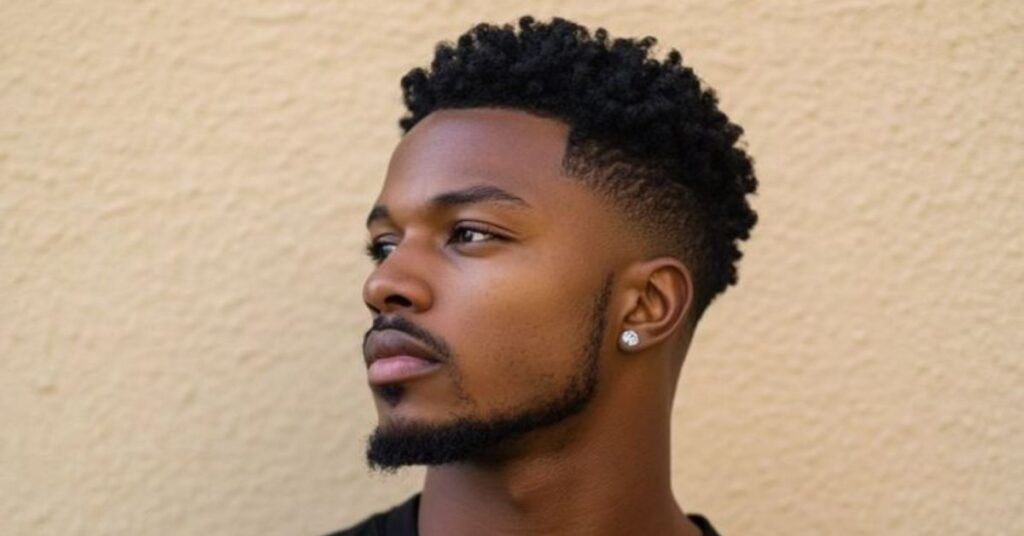
The Temple Fade focuses all of its fade work strictly within the temple area, the region at the sides of the forehead, between the hairline and the ear. The result is a sharp, geometric frame created by the contrast between the blended temple area and the fuller hair above it. Unlike a traditional fade that moves vertically from ear up to crown, the temple fade works horizontally across the temple zone, creating a distinctly different visual structure. Known regionally as the Brooklyn Blowout.
BEST FOR: Round, oval, and square face shapes. Particularly powerful for men with straight hair who have thick side growth around the temples, as the fade cleanly removes the bulk in that specific area without changing the overall structure of the cut.
STYLING TIP: Since the sides are clean, style the top based on length. Blow dry longer top hair upward and backward for volume, or use your fingers to sweep shorter hair forward for a sharp contrast.
MAINTENANCE: Every 3–4 weeks
RECOMMENDED PRODUCT: Matte Clay (for textured tops) or Pomade (for slick looks).
33. Drop Fade with Straight Fringe

The Drop Fade is a variation where, instead of the fade line running horizontally around the head, it drops downward behind the ear, following the curve of the skull before rising back up at the neckline. This creates a rounded, U-shaped silhouette when viewed from behind. When paired with a straight, blunt-cut fringe at the front, the combination creates a striking interplay between the curved back silhouette and the geometrically flat front fringe, a juxtaposition that is inherently modern.
BEST FOR: Oval and round face shapes. The drop fade’s curved silhouette softens angular skull shapes, while the straight fringe adds a deliberate horizontal element. Suitable for men in fashion-forward, creative, or urban professional environments.
STYLING TIP: Keep the fringe lying flat and straight using a flat paddle brush during blow-drying, and apply a light-hold wax or paste along the fringe line. The contrast between the clean fringe and the dramatic drop at the back is the visual payoff of this cut.
MAINTENANCE: Every 3–4 weeks
RECOMMENDED PRODUCT: Light Wax or Paste for fringe definition
34. Burst Fade with Straight Hair

The Burst Fade creates a semi-circular fade pattern radiating outward around the ear, like a burst of light expanding from a central point. The hair in the burst zone is faded from a #0 at the ear to a longer length above, creating a visible arc of gradually increasing hair density. This technique is commonly used alongside Mohawks or Faux Hawks, where the burst pattern visually frames the ear and creates a sporty, dynamic silhouette. For men with straight hair, the Burst Fade creates a strong geometric contrast against the naturally smooth top section.
BEST FOR: Oval and diamond face shapes. Men in sports, fitness, music, entertainment, and other high energy lifestyle environments. Best for straight-haired men who want a statement fade that goes beyond conventional styles.
STYLING TIP: The burst pattern itself requires no maintenance at home; it is purely a barbering technique. The top section can be styled in whatever direction complements the burst. Matte clay or fiber paste typically works best for the textured tops commonly paired with burst fades.
MAINTENANCE: Every 2–3 weeks (burst fades lose their arc shape quickly as hair grows)
RECOMMENDED PRODUCT: Matte Clay or Fiber Paste (for the top section)
35. Mop Top Modernization
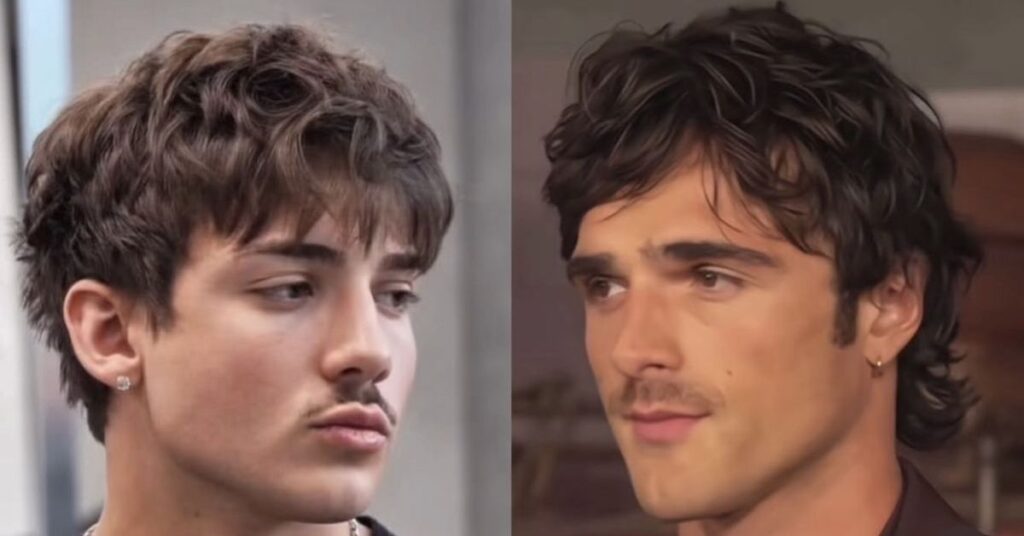
The original Mop Top was popularized by The Beatles in the 1960s as a long-ish, bowl shaped cut that covered the forehead and ears with straight, forward falling hair. The 2026 Modernization retains the essential spirit (longer hair on top that falls toward the face) while addressing the classic version’s primary weakness: the mushroom effect created by uniform-length straight hair hanging at equal distances all around the head. The modern version introduces strategic thinning and subtle internal layering, allowing the hair to fall with movement and texture rather than as a single heavy block.
BEST FOR: Oval and heart face shapes. Works specifically well with straight hair because the style is built on the natural forward-falling behavior of straight strands. Excellent for men who want a retro-influenced look that still reads as contemporary.
STYLING TIP: Always ask your barber to use thinning shears on the perimeter to prevent a mushroom shape. At home, simply towel-dry and apply texturizing spray to let the choppy layers separate naturally.
MAINTENANCE: Every 6–8 weeks
RECOMMENDED PRODUCT: Texturizing Spray + Optional Light Cream for definition
36. Disconnected Undercut Variation
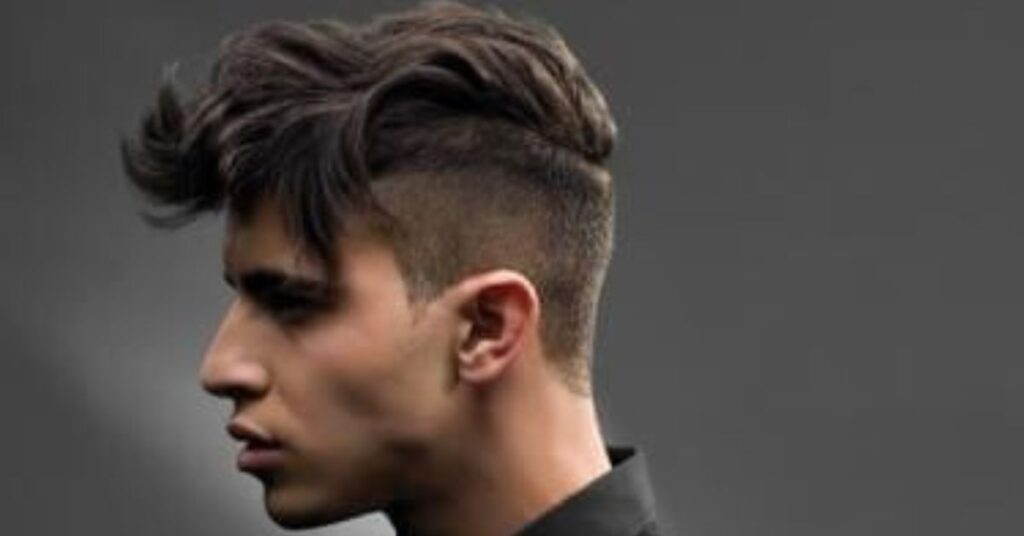
This Disconnected Undercut Variation explores medium-length tops (2–4 inches) combined with sharply disconnected sides. The lack of a blend between the short sides and the medium top creates a particularly striking step effect: a perfectly visible horizontal line that separates two different lengths of hair. This hard, geometric boundary is the defining artistic statement of the disconnected undercut and creates a look that is simultaneously architectural and bold.
BEST FOR: Strong, angular face shapes square and diamond. The geometric nature of the disconnected line mirrors and reinforces angular facial features. Best for men with straight hair who have confidence in their personal style and want a look that makes a statement.
STYLING TIP: Style the top section with a medium-hold matte product either combed to the side for a sharp look or left textured for a more casual result. The disconnected line does not require any product maintenance; it is maintained by your barber.
MAINTENANCE: Every 3–4 weeks (the disconnected line disappears quickly as hair grows over it)
RECOMMENDED PRODUCT: Medium-Hold Matte Clay or Paste
37. Angled Fringe
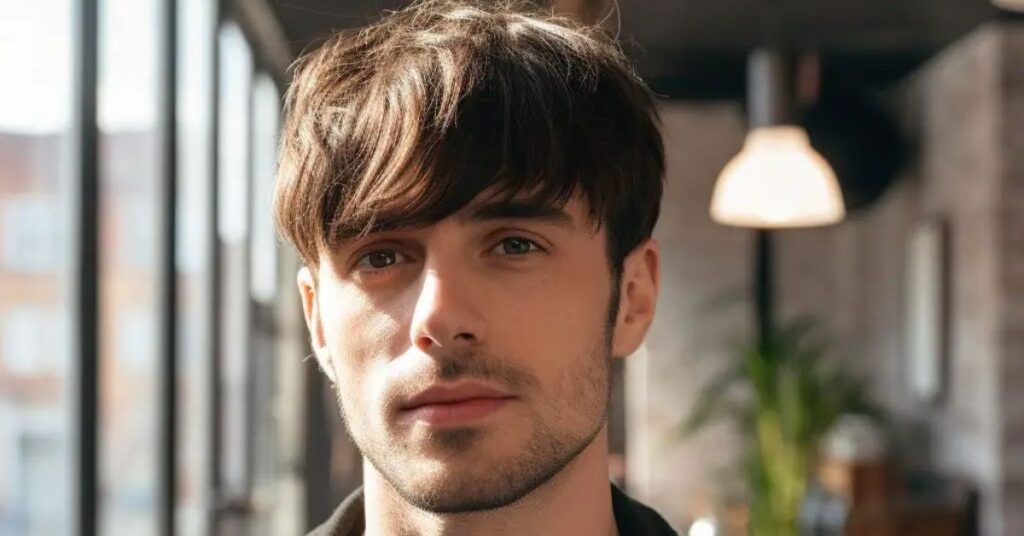
The Angled Fringe is a precision haircut technique where the fringe section is cut at a deliberate diagonal one side noticeably longer than the other, creating a sweeping line across the forehead from high on one side to low on the other. Unlike the softer asymmetrical fringe, the Angled Fringe is cut with geometric precision; the angle is straight, deliberate, and bold rather than gradually tapered. The sides of the cut can be faded or tapered, with the focus kept on the angled front line.
BEST FOR: Men with straight hair who want to add strong visual interest and asymmetry to their appearance. Works particularly well with oval and oblong face shapes, where the diagonal fringe introduces a horizontal element that visually shortens the face.
STYLING TIP: Blow dry the fringe in the direction of the angle from the shorter side toward the longer side using a flat brush. Apply a light serum or cream to maintain the sleek, defined line without adding stiffness.
MAINTENANCE: Every 4–5 weeks
RECOMMENDED PRODUCT: Light Serum or Smoothing Cream + Optional Light Pomade
38. Side Swept Fringe
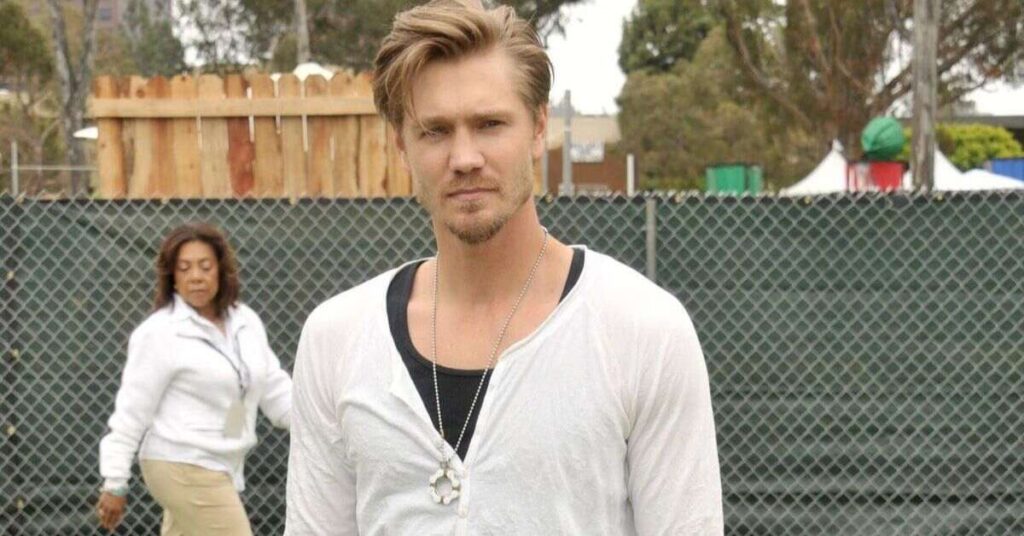
The Side Swept Fringe is one of the most enduringly popular hairstyles for men consistently appearing in trend reports across decades because it occupies a perfect middle ground between structured and relaxed. The front hair is trained to fall diagonally across the forehead, creating a soft, sweeping arc that partially covers the forehead without the bluntness of a full fringe. For men with straight hair, the natural weight of straight strands makes the sweeping direction easy to achieve and maintain the hair falls naturally across the forehead with minimal product.
BEST FOR: All face shapes. Universally flattering because the soft diagonal line is inherently face-softening. Excellent for men with straight hair who have a wide or prominent forehead that they would prefer to soften or partially conceal.
STYLING TIP: While the hair is damp, comb the front section across the forehead in your preferred direction. Blow dry in that direction using a medium sized round brush for a smooth, natural sweep. A very light amount of flexible paste or cream keeps the sweep in place without adding stiffness.
MAINTENANCE: Every 5–6 weeks
RECOMMENDED PRODUCT: Flexible Paste or Light Cream
39. Bro Flow Classic
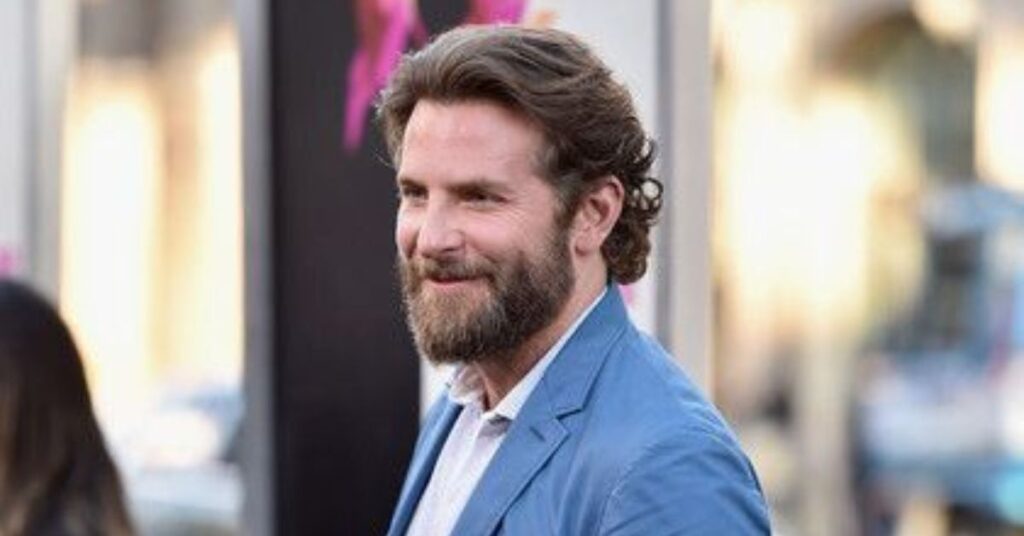
The Bro Flow is the pure, uninterrupted expression of letting straight hair grow to a medium length (typically chin-to-collar) and styling it to flow backward and to the sides in a natural, unrestrained way. The name comes from its association with athletes, surfers, and outdoor enthusiasts who allow their hair to grow out during a season and style it by sweeping it back from the face. The result, when the hair is healthy and the cut is maintained, is a look that communicates effortless confidence that the hair has clearly been grown intentionally but not obsessed over.
BEST FOR: All face shapes. The defining criterion is not face shape but hair health; the Bro Flow only works when the hair is genuinely healthy, shiny, and well-maintained. Men with naturally thick, glossy straight hair often find this style is their natural best look.
STYLING TIP: Run your fingers through the hair after showering and sweep it backward and away from the face. Apply a very small amount of light sea salt spray to add texture and prevent the hair from lying completely flat against the scalp. Alternatively, allow air dry with no product for the most natural result.
MAINTENANCE: Every 8–10 weeks (trim only to remove split ends)
RECOMMENDED PRODUCT: Light Sea Salt Spray or Light Hair Oil
40. Textured Crop with Hard Part
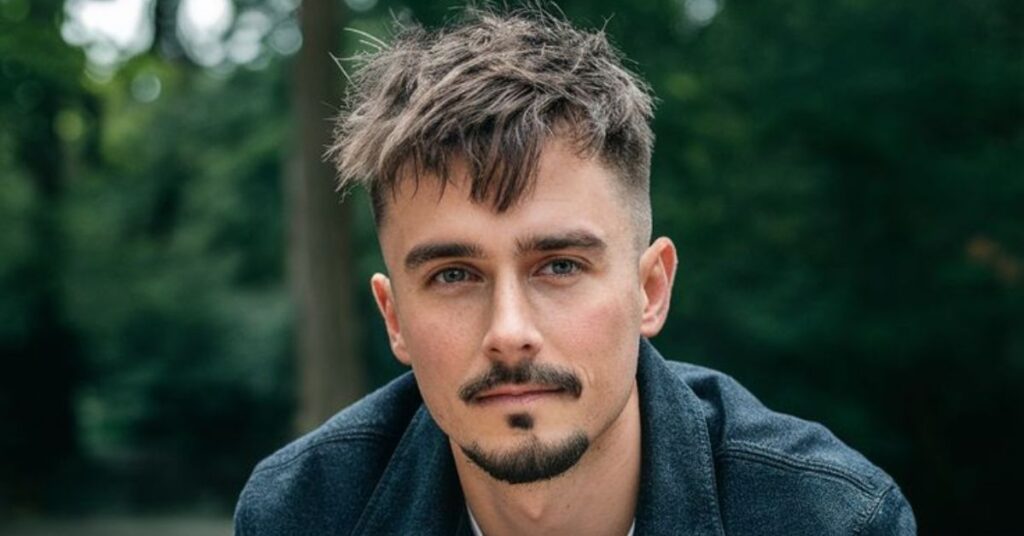
The Textured Crop with Hard Part is the most technically precise cut on this list, combining two demanding barbering techniques in a single style. The textured crop refers to a short to medium top (1.5–3 inches) where the hair is cut using point cutting and texturizing techniques to add separation and movement to straight strands. The hard part is a razor-shaved line cut directly into the scalp along the natural parting creating a perfectly straight, white line division that is visible through the hair. This combination creates a look of exceptional attention to detail.
BEST FOR: All face shapes. Particularly powerful for men with straight, thick hair where the razor shaved hard part creates a bold, geometric contrast against dense hair. Excellent for men who want to project precision, discipline, and sophistication through their grooming.
STYLING TIP: The hard part requires no daily product application; it is shaved into the scalp and cannot be disturbed by styling. Style the textured top by applying a matte clay or fiber paste with your fingers, working in the direction away from the hard part and toward the opposite side.
MAINTENANCE: Every 2–3 weeks (the hard part fills in quickly as hair grows, and must be re-shaved at every visit)
RECOMMENDED PRODUCT: Matte Clay or Fiber Paste
The Ultimate Styling Guide for Straight Hair
Men with straight hair usually find styling easy, but the right method still matters. A good haircut adds shape and prevents the hair from looking flat. Always start with dry or slightly damp hair. Use a small amount of product to keep the style light and natural.
Product choice makes a big difference for men with straight hair. Matte clay or paste works best for texture and volume. Light pomade is better for clean, polished looks. With the right cut and simple routine, styling becomes quick and effortless.
Step by Step: From Wash to Finish
Start with clean hair. Use a light shampoo to avoid buildup. Dry your hair gently with a towel. Use a blow dryer if you need volume. Apply a small amount of product. Style with your fingers or a comb. Finish with a natural look, not stiff or heavy.
How to Ask Your Barber (Reference Photo Tips)
- Bring clear photos from different angles
- Choose photos with a similar hair type
- Tell your barber how much time you style daily
- Explain if you want volume, texture, or a clean look
- Ask what will suit your face shape best
The 2026 Grooming Toolkit (Pomade, Clay, & Paste)
| Product | Best For | Finish |
| Pomade | Sleek and classic styles | Smooth & shiny |
| Clay | Volume and texture | Matte & natural |
| Paste | Flexible everyday looks | Light & clean |
Using the right tools makes styling easier and faster. Choose one product that matches your lifestyle and haircut.
FAQs
1. Is straight hair easy to style for men?
Yes. Straight hair is smooth and manageable. The right cut and product make styling quick.
2. Which haircut works best for men with straight hair?
Textured crops, quiffs, and modern fades work very well. They add volume and shape.
3. How can men with straight hair add volume?
Use a blow dryer and a matte product like clay. Avoid heavy creams or oils.
4. How often should straight hair be washed?
Two to three times a week is enough. Overwashing can make hair flat and dry.
5. Do straight hairstyles suit all face shapes?
Yes. With the right length and texture, straight hairstyles can suit any face shape.
Conclusion
Men with straight hair have many great styling options today. The key is choosing a haircut that adds shape and texture. Simple styling habits can make a big difference. The right product helps your hair look clean and fresh all day.
This guide shows that straight hair never goes out of style. Trends may change, but good grooming always matters. With the right cut and care, you can look confident and modern in 2026 and beyond.

Ryan Cole writes about men’s grooming, covering barbering techniques, current trends, and how styles adapt across different hair types and face shapes. He focuses on practical, wearable advice: how to describe a cut to your barber and how to maintain it day to day.