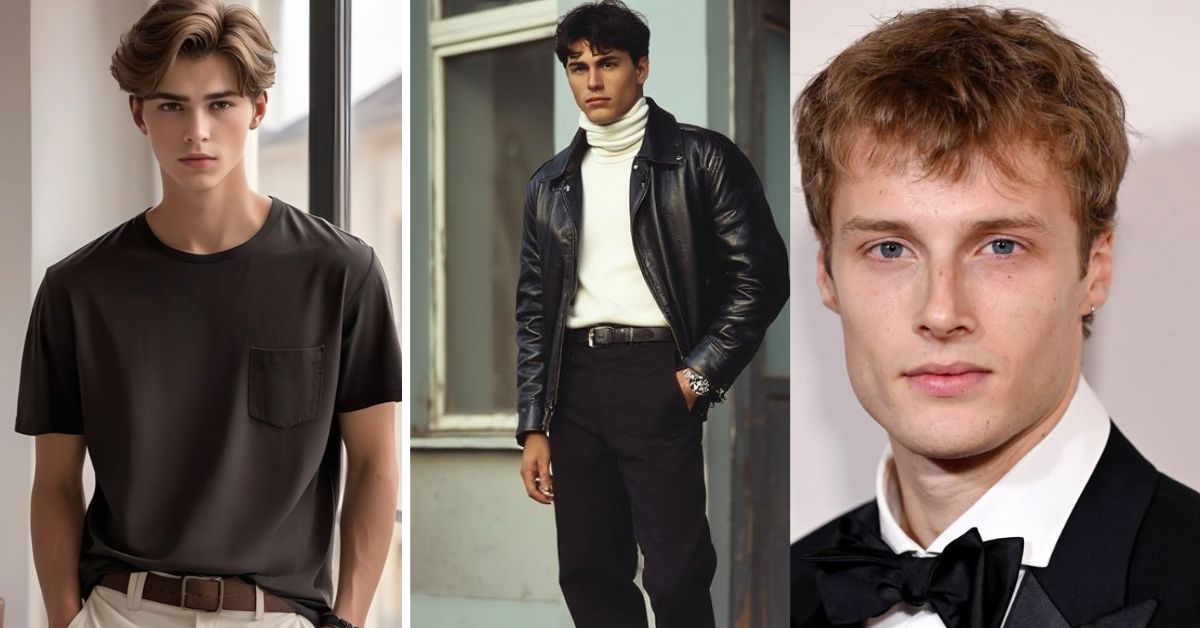
Mod hairstyles began in 1960s Britain and are built on a clean, rounded outline with a fringe at the brows and tidy sides. The cut grew out of the mod youth scene, where a sharp, put-together look mattered as much as the clothes. It has been revived several times since, most recently with more texture and softer edges.
This guide covers 30 versions, from the strict 60s original to looser cuts such as the Britpop, textured, and wolf mod. Each one says who it suits and what to ask your barber. It also explains how to pick a style for your face shape and hair type, and how to style and maintain it afterwards.
Decoding the Mod Cut: Definition and Cultural Heritage
The mod cut is a clean and stylish haircut. It focuses on sharp lines and a well-shaped top. The sides stay neat and balanced. This haircut gives a smart and confident look.
The mod cut comes from British youth culture. It became popular in the 1960s with music and fashion trends. Young men used it to show style and attitude. Today, the mod cut keeps that heritage while feeling modern.
From the 60s British Invasion to the 90s Britpop Revival
The mod cut became popular during the 1960s British Invasion. Bands and street culture made it trendy fast. It represented youth, music, and fashion together.
In the 1990s, Britpop brought the style back. Artists refreshed it with new shapes and textures. The mod cut stayed modern while keeping its heritage.
Is the Mod Cut Right for You? (Selection Guide)
Most mod hairstyles work on most men, but two things decide how well one suits you: your face shape and your hair type. Check both before you pick a style from the list below.
Choosing a Cut Based on Your Face Shape
Oval faces suit almost every version, so choose by hair type and by how much time you want to spend styling.
Square faces have a strong jaw and forehead. A textured or slightly side-swept fringe softens those angles, while a blunt, heavy fringe makes them look harder.
Round faces look best with some height on top and trimmer sides. Avoid a very heavy fringe cut straight across, because it can make the face look wider.
Heart-shaped faces have a wide forehead and a narrow chin. A longer fringe that covers part of the forehead, with a bit more weight at the sides, balances the proportions.
Diamond faces have wide cheekbones and a narrower forehead and chin. A textured fringe that adds some width at the forehead balances this, while a slicked-back style makes the cheekbones look sharper.
Oblong faces are longer than they are wide, with a high forehead. A fringe that sits at the brows covers part of the forehead, and keeping the top from getting too tall stops the face from looking longer.
Matching the Mod Cut to Your Hair Type (Straight, Thick, or Thin)
Straight hair shows the sharp lines of a mod cut best, but it can look flat. A quick blow-dry with a little lift at the roots fixes that.
Thick hair needs layers or internal thinning, or the shape turns into a helmet.
Fine or thin hair looks fuller with blunt edges and very few layers, because every layer removes some density.
Wavy or curly hair works well if you keep it slightly longer, so the fringe does not spring up and shorten. See the curly and wavy mod cuts in the list below.
30 Best Mod Haircut Variations to Try in 2026
1. Classic 60s Mod
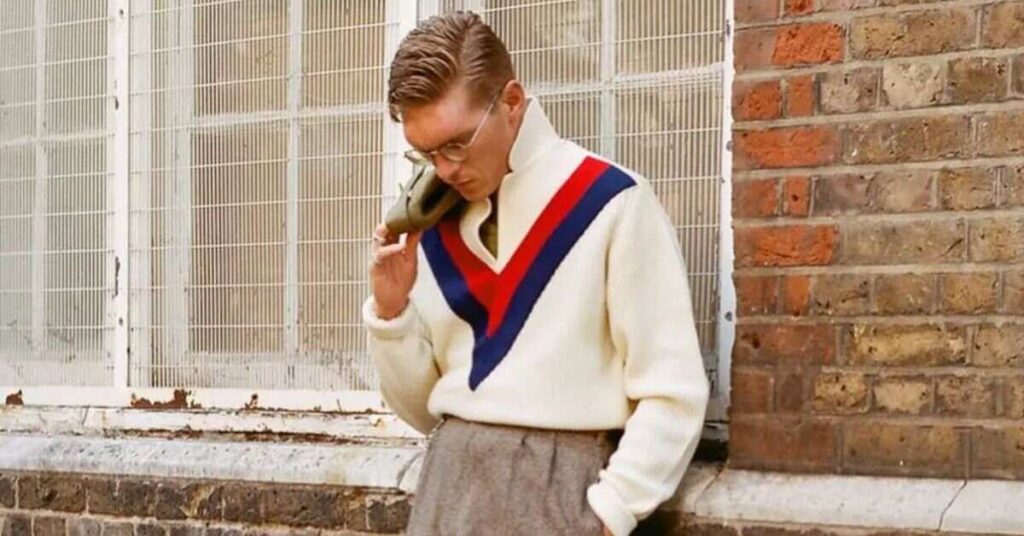
The classic 60s mod is the original shape that every other style in this list borrows from. The fringe is cut straight and sits at the eyebrows, the sides are full enough to cover the top of the ears, and the outline is rounded rather than sharp. Blow-dry it with a flat brush so it dries smooth, then leave it alone.
- Length: brow-length fringe, sides over the top of the ears, back ending at the nape
- Works on: straight hair and oval faces
- Say this to your barber: “Brow-length fringe, rounded shape, sides over the ears, no fade”
2. 90s Britpop Style
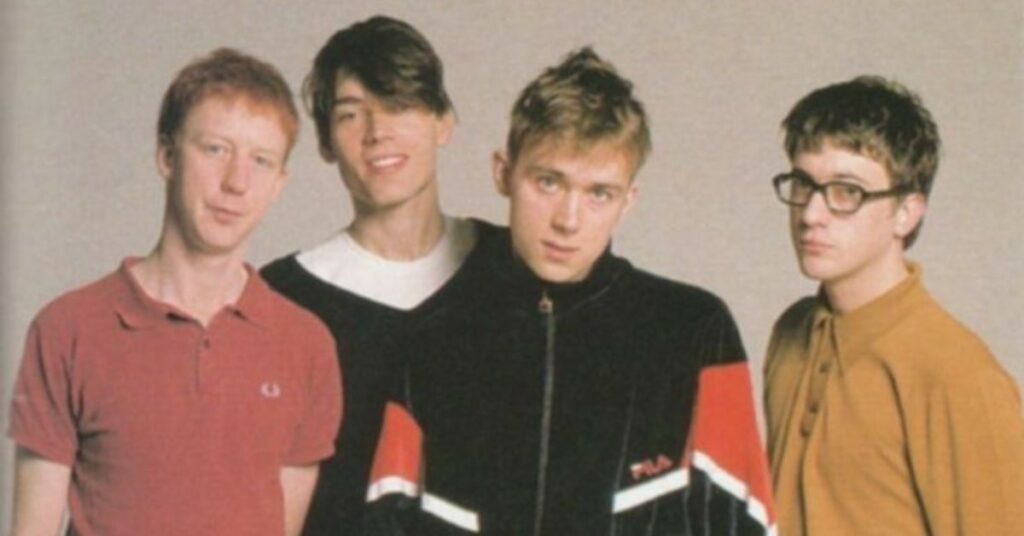
The Britpop cut is the loose, lived-in opposite of the classic mod. It keeps the fringe and the rounded outline, but the edges are feathered and uneven, so the hair looks like it was never styled on purpose. The look comes from 1990s British indie bands.
It suits fine hair, because the feathered layers add movement that fine hair lacks. Use a little texture powder at the roots instead of paste, then tousle it with your fingers. Too much product turns this look into an ordinary messy cut.
3. The Mod Mullet
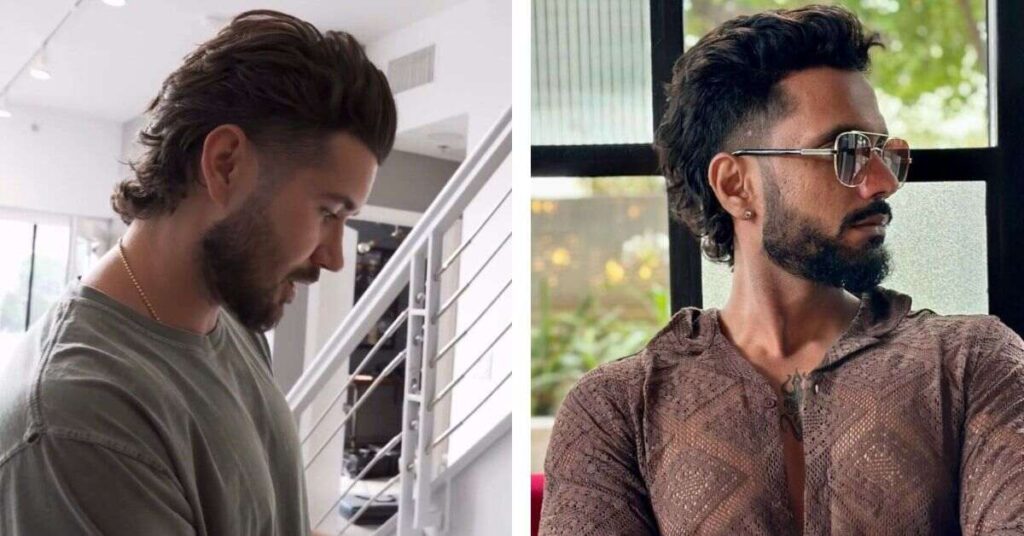
The mod mullet keeps the mod fringe at the front and lets the back grow longer, ending at or below the collar. From the front it still reads as a mod cut, and the length only shows from the side. If a full mullet feels like too much, this is the milder version.
Keep the back tapered instead of blunt, and use a light cream to define the back layers without making them stiff. For other mullet shapes, see our modern mullet guide.
4. Short Mod Cut

The short mod keeps the mod outline but cuts it down. The fringe sits just above the eyebrows and the sides are cropped close. It is the easiest version to keep tidy, and a small amount of matte clay is enough for a natural hold.
- Pick it if you have a square face, or you want a mod look that takes two minutes in the morning.
- Skip it if your face is narrow, because cropped sides make a narrow face look thinner.
5. Long Shaggy Mod
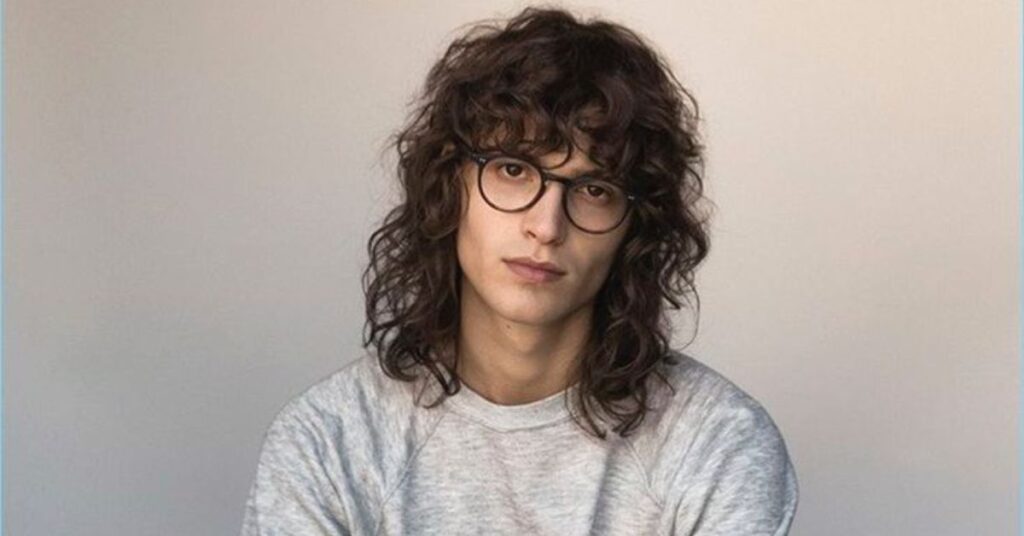
The long shaggy mod lets the hair grow to the collar and cuts deep, uneven layers through it using point cutting, which means snipping into the ends instead of cutting straight across. The fringe stays, but it blends into the layers instead of sitting as a hard line.
This cut suits wavy or thick hair, because the layers take out weight and give the waves room to show. Spray a little sea salt spray on damp hair and let it dry naturally. Most men compare a few shaggy haircuts for men before they choose how long to go.
6. Choppy Mod Cut
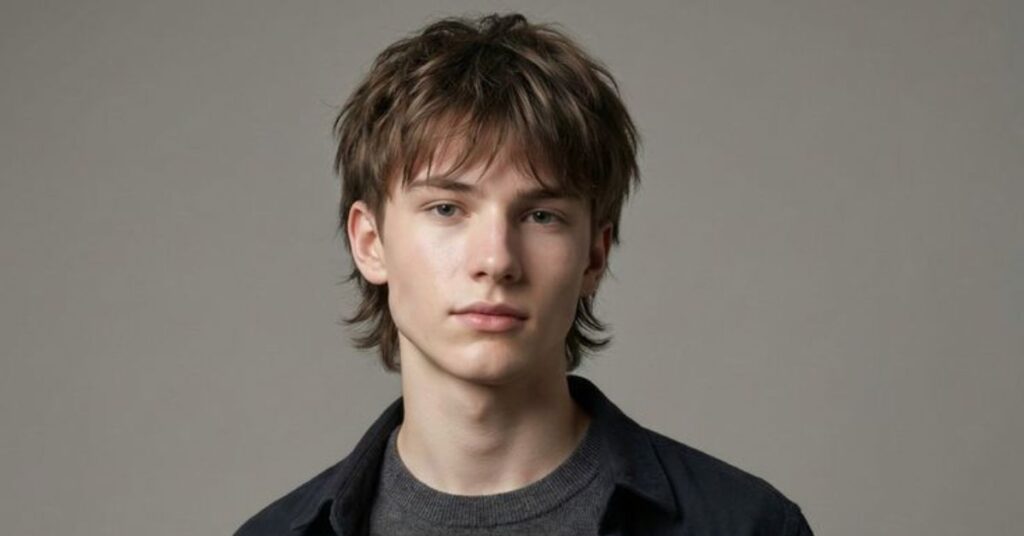
The choppy mod keeps the mod fringe and rounded outline, but the ends are cut unevenly, so the hair breaks into short pieces instead of falling in one smooth line. The difference from the textured mod and the layered mod below is in the cutting method. Here the roughness is cut in, not styled in.
It suits round faces and anyone who wants a mod cut that looks less polished. The broken-up edges add angles around the forehead and cheekbones, which makes a soft face look more defined. On very fine hair the effect can look thin, so ask your barber to keep the length on top and only rough up the ends.
Ask for “point cutting” on the fringe and sides, and say you want the pieces uneven but not short. To style it, rub a pea-sized amount of wax between your palms and press it into the tips only. If you put wax on the roots, the whole cut goes flat.
7. Textured Mod

The textured mod is about weight, not shape. The barber removes bulk from inside the hair, so the outline stays rounded but the hair moves instead of sitting like a helmet. This is the version to pick if your hair is thick, coarse, or tends to grow out instead of down. Without the thinning, thick hair puffs at the sides and the mod shape is gone within a couple of weeks of a cut.
To keep the texture at home:
- Dry your hair fully before you style it.
- Rub a pea-sized amount of matte paste between your palms and work it through the mid-lengths, not the roots.
- Twist the ends lightly between your fingers to separate them.
- If it goes flat by afternoon, spray a little dry shampoo at the roots and lift with your fingers.
Ask your barber for “internal layers” or “thinning from the inside,” and say clearly that you want to keep the length.
8. Layered Mod
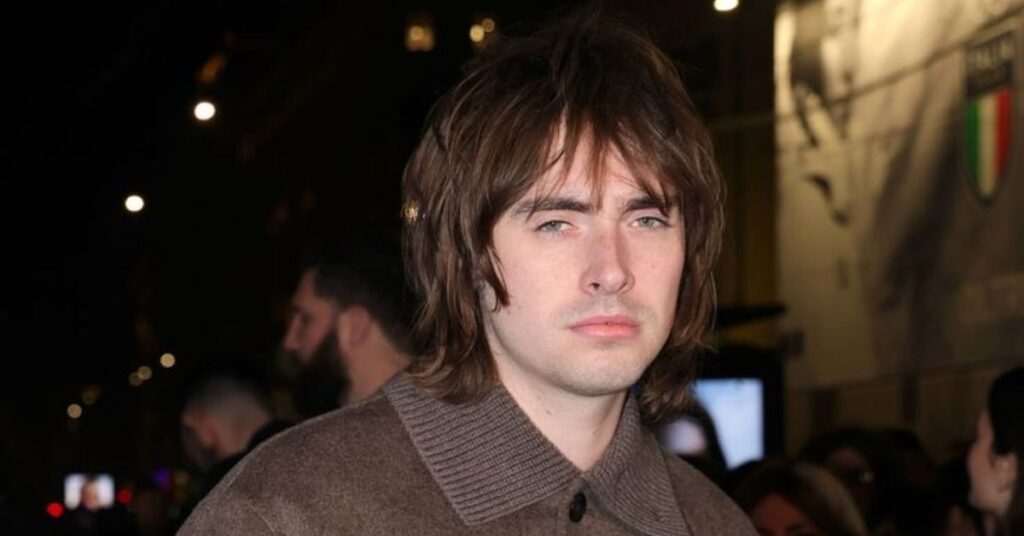
The layered mod is the smoothest of the three. The layers are blended so the hair steps down from the fringe into the sides with no visible breaks. Where the choppy mod shows its cuts, this one hides them, so from a distance it looks like a clean, rounded shape and the movement only shows up close.
That makes it the easiest version to wear to work or a formal event. The soft finish suits oval and heart-shaped faces, and it works on straight to slightly wavy hair. On very curly hair the layers can spring out of shape, so keep them longer. If you want a bigger change, there are plenty of other layered haircuts for men that go further than this one. A leave-in conditioner on damp hair keeps the layers smooth, and a trim every 4 to 6 weeks stops the steps from growing out into a shapeless cut.
9. Modern Mod

The modern mod is the classic mod with the edges tidied up. If you like the 60s shape but find it too heavy or too flat for daily life, this is the version most barbers will suggest. Compared with the original:
- The fringe is cut more precisely, usually a little shorter and with a cleaner line across the brow
- The sides are tapered instead of left full, so the ears show slightly
- The finish is groomed and lightly textured instead of flat and smooth
It works well in an office or a formal setting, and it grows out better than the 60s original because the taper keeps the sides from ballooning. Use a light-hold pomade on damp hair for a little shine, and skip heavy gel.
10. Wolf Mod Cut
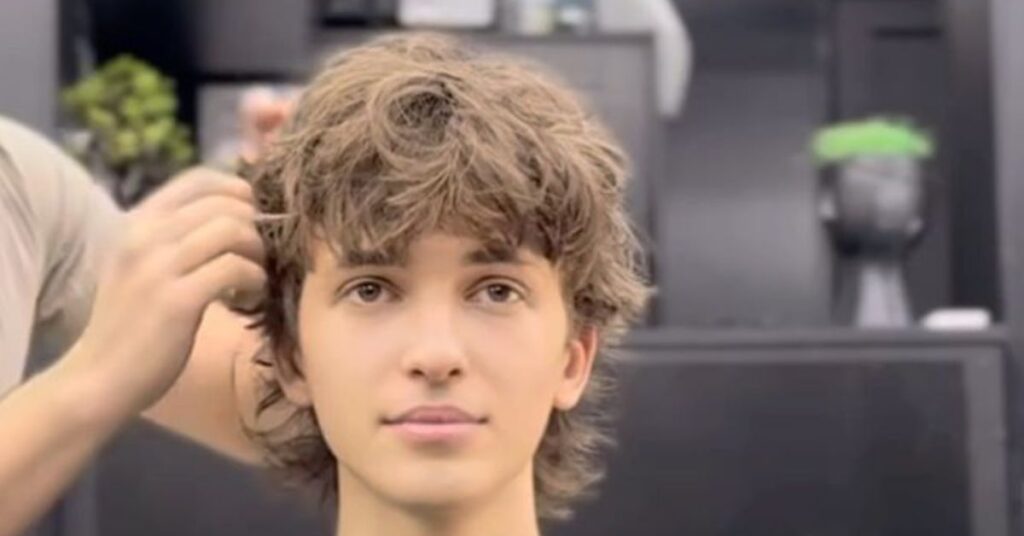
The wolf mod mixes the mod fringe with the layered volume of a wolf cut: short layers on top, a heavy textured fringe, and longer sides and back. It looks fuller and wilder than any other cut in this list, and it is the one most likely to get a second look.
The risk is that it turns into a plain shag if the fringe disappears. Keep the fringe line at the brows and let the layers do the rest. Because the crown is cut short and the sides stay long, it adds height, which helps on round faces but can make a long face look longer.
For styling, blow-dry the hair upside down to lift it at the roots, then add product once it is dry. A little sea salt spray or light paste is enough. To see how a mod cut differs from a wolf cut, read the comparison further down this page.
11. Curly Mod Cut
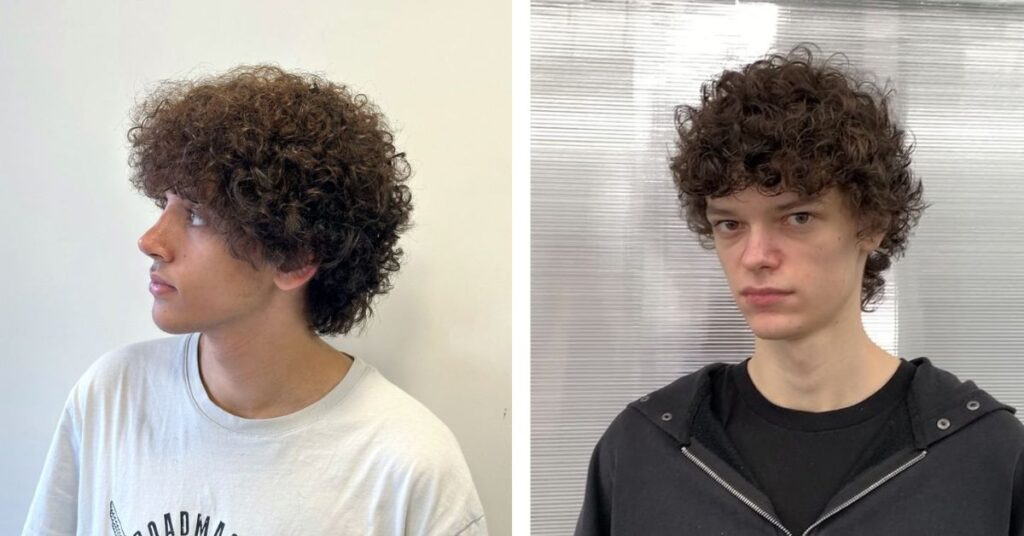
The curly mod keeps the rounded mod outline but lets the curls make the shape. Instead of cutting a flat fringe across the brow, the barber cuts the fringe longer and lets it curl up, so it ends up around eyebrow height once the curls spring back. This is the main thing to know before you sit down: curly hair looks shorter dry than it does wet.
The cut also has to avoid the “pyramid” shape, where the sides puff out and the top stays flat. Ask for the sides to be kept trimmer than the top, and for the length to be cut with scissors while the hair is dry, so your barber can see where each curl sits.
Apply a curl cream to damp hair and scrunch it upward, then let it dry without touching it. Brushing curls once they are dry breaks them into frizz. Plan on a trim every 6 to 8 weeks so the rounded shape does not lose its outline.
12. Wavy Mod Cut
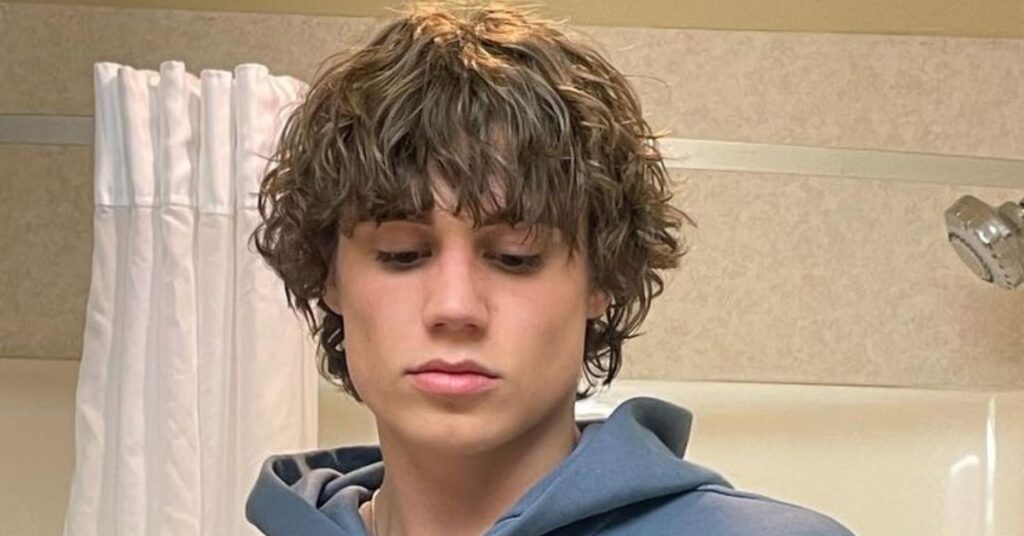
The wavy mod is the easiest mod cut to wear, because waves already give the fringe the soft movement that other versions have to create with product. The cut only has to guide the waves instead of fighting them. It suits heart-shaped faces and medium-length hair, and it needs less styling than the straight version.
To get the wave pattern without frizz:
- Towel-dry your hair gently, without rubbing.
- Work a light cream or sea salt spray through damp hair.
- Dry it with a diffuser on low heat, holding sections lightly at the roots.
- Leave it alone once it is dry.
If your waves are loose, keep the fringe a little longer, because short fringes spring up and look uneven. Prefer a center part? A wavy middle part works with the same waves.
13. Mod Cut for Straight Hair
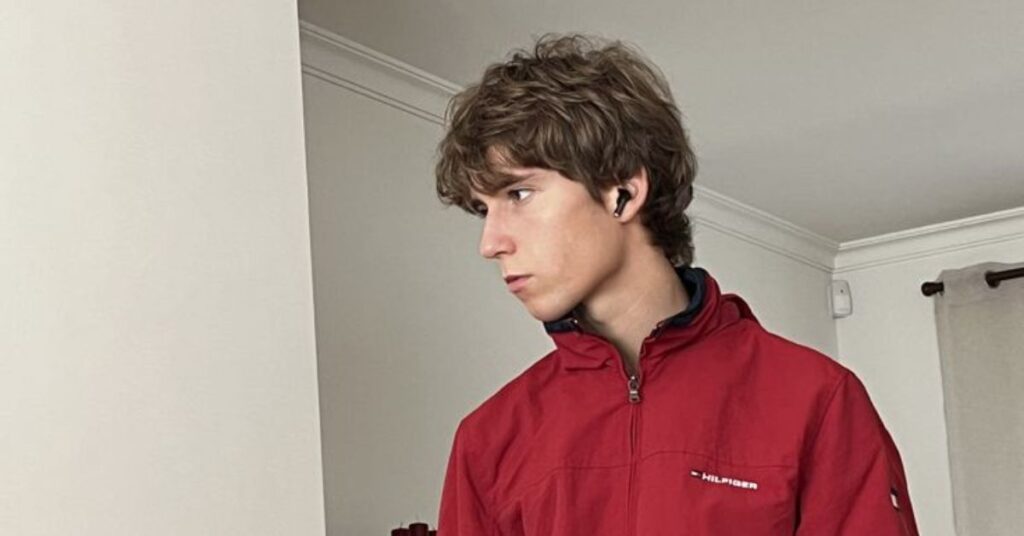
Straight hair shows every line of a mod cut, which is why this version relies on precision. The fringe is cut straight across at the brow, and the sides are kept symmetrical, so even a small mistake is visible. If you like clean geometry, this is the cut for you. If you want something forgiving, pick the wavy or textured mod instead.
Straight hair also tends to lie flat, so the finish decides how it looks. Blow-dry the roots up and away from the scalp for lift, then let the fringe fall straight. A light spray holds the line without the stiffness of gel.
Ask your barber for:
- A blunt, straight-across fringe cut dry
- Symmetrical sides over the top of the ears
- No heavy layering, because layers break up the line this cut depends on
14. Mod Cut Perm
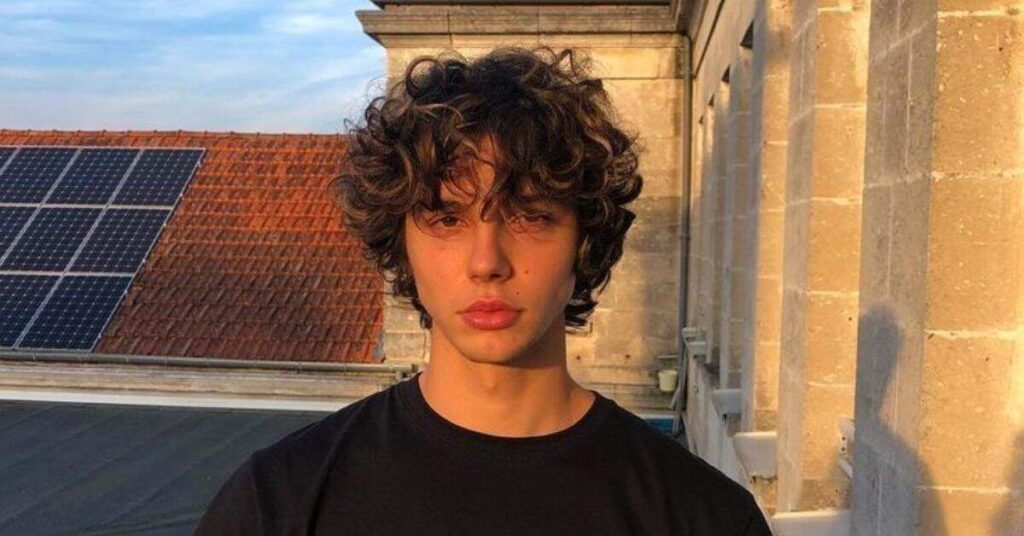
A perm is a chemical treatment that sets waves into the hair, so a mod cut perm builds the texture into the hair instead of relying on styling every morning. It is a fit for flat, fine hair that will not hold a shape, because the waves add body and make the fringe sit with some lift.
It comes with trade-offs. Perming and bleaching can leave hair dry and brittle, according to the American Academy of Dermatology, so a perm suits healthy, undamaged hair best. It also grows out over several months, so you will have waves at the ends and straight hair at the roots until you cut it or perm it again. Ask a licensed stylist for a “loose” or “body wave” perm, not a tight curl, and mention any bleach or color you have used.
After the perm, wash less often and use a leave-in conditioner. Skip heavy waxes, which weigh the waves down, and use a light mousse instead.
15. Fluffy Mod

The fluffy mod trades definition for volume. The hair is lifted away from the roots and left soft and airy, so the fringe looks like it floats instead of lying flat. It suits medium-length hair, and it works best on hair that already has some body. The same soft, lifted finish is also the base of many fluffy hairstyles for men.
The lift comes from the blow-dry, not from product:
- Dry the hair in the opposite direction of how it grows, then flip it back
- Finish with a cool-air setting to hold the lift
- Use a light mousse or a little powder at the roots instead of heavy cream
Heavy products flatten this cut within hours, so skip pomade and wax.
16. Korean Mod Cut
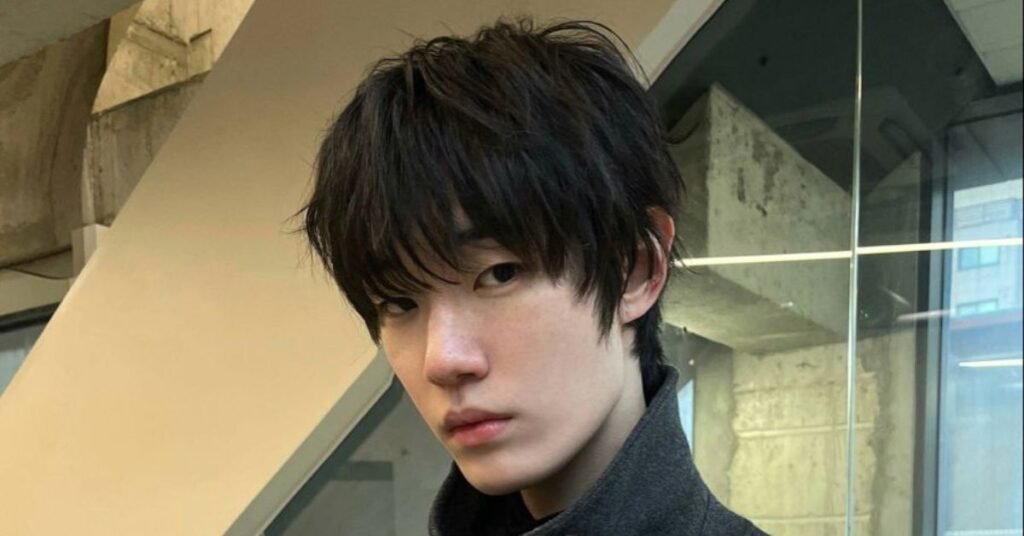
The Korean mod cut swaps the blunt mod fringe for a soft, curved one. The hair falls forward and bends slightly at the ends, often in a “comma” shape, and the sides are tapered so the ears show a little. The overall effect is lighter and smoother than the 60s original, which is why it suits straight, thick hair so well.
The shape depends on the blow-dry. Dry the fringe with a round brush, curving it in toward the forehead, and keep the roots lifted so it does not collapse by midday. A little hair oil or serum on the ends adds shine, but too much will make straight hair look greasy. The soft curve at the front is the same idea behind the comma haircut.
If your hair is very fine or very curly, this cut takes more work to hold. Ask your barber for a softer curve and a few light layers, and bring a photo so you both agree on how long the fringe should be.
17. Asian Mod Cut

This version is built for hair that is thick, straight, and coarse, which is common but not limited to people of East Asian descent. That kind of hair tends to grow outward and look bulky, so the barber removes weight from inside the hair instead of just cutting the outline. The result keeps the rounded mod shape, with enough air in it that the hair does not sit like a helmet.
The finish matters as much as the cut. Coarse hair tends to stick together in clumps, so a small amount of matte paste worked through the ends separates it into pieces instead of leaving it flat. Skip heavy waxes and anything shiny.
Ask your barber for:
- Thinning or “internal layers” to remove bulk, not shorter length
- A rounded outline, with the sides kept slightly longer than the nape
- A trim every 4 to 6 weeks, since thick hair loses its shape quickly
18. Mod Cut Taper

The mod cut taper keeps the heavy fringe at the front and tidies the back and sides with a gradual taper, where the hair gets shorter in small steps toward the neckline. It is the version for men who like the mod look but need a clean neck for the office. Unlike a fade, a taper leaves some hair at the bottom, so the effect is neat without looking harsh.
Tapers show growth sooner than the rest of the cut, so book a visit at 3 to 4 weeks to clean up the neckline, even if the top still looks fine. A full trim every 4 to 6 weeks keeps the shape. Add a blow-dry to the top and you get something close to a blowout taper.
Ask for “a short taper at the nape and around the ears, leave the fringe long.”
19. Mod Cut with Fade

A fade shaves the sides down to skin or close to it, so the mod top stands out as the main feature. The contrast is stronger than with a taper, which makes this the boldest of the neat versions. It suits square or angular faces, because the clean sides draw the eye to the jawline.
The height of the fade changes the look:
- Low fade: starts near the ears and keeps the cut closer to a classic mod
- Mid fade: starts around the temples and is the most balanced choice
- High fade: starts high on the head and gives the sharpest contrast, but it grows out the fastest
Fades need a trim every 2 to 3 weeks to look fresh, which is more often than any other mod cut here. Use a firm clay to keep the top from flopping onto the sides. Not sure which height fits your head? Compare a high fade vs a low fade before you book.
20. Classic Brit Style

The classic Brit style is the 60s mod softened for everyday life. The fringe sits at the brows, but it is cut with a little movement, and the sides are medium length rather than full. It sits between the neat original and the messy Britpop version, which makes it a safe choice if you want a mod look without committing to either extreme.
It works well on straight to slightly wavy hair and needs very little product. Towel-dry the hair, add a little sea salt spray, and leave it. If the fringe curls up or splits, a small amount of light cream on damp hair settles it.
The main thing to watch is length. If the fringe grows past the eyebrows, the shape starts to look overgrown instead of intentional, so trim it every 4 to 6 weeks. It pairs well with simple, structured clothes, such as a plain jacket or a knit.
21. Mod Cut Fringe

This version puts all the weight at the front. The fringe is cut thick and heavy, skimming the eyebrows, while the sides are kept a little shorter than the other mod cuts. The rest of the head plays a supporting role, so everything depends on how well the fringe is cut.
It suits men with a high forehead, because a thick fringe covers part of it and balances the face. If you are unsure how long to go, haircuts for big foreheads shows how much a fringe can change the proportions.
Dry the fringe straight down with low heat and a flat brush. If a cowlick makes it split or flick up, hold it down with a little cream while it dries, and ask your barber to cut it a few millimetres longer, because the weight of a longer fringe helps it lie flat.
22. Spiky Mod

The spiky mod breaks the smooth, rounded shape of the classic and pushes the top upward in short pieces. The fringe stays, but it can be flattened for work or lifted for a night out, so one cut gives you two looks. The added height also suits round faces, because it makes the face look longer.
To style it:
- Dry your hair completely and keep the crown lifted with your fingers.
- Warm a small amount of fiber wax between your palms.
- Pinch and pull the top layers upward in sections, working from the back to the front.
- Press the fringe flat if you want the smoother version.
The cut needs short layers on the crown, so ask your barber to leave about 3 to 5 cm on top. Wash the product out at night, because wax that stays in overnight dries the hair and the scalp.
23. Pixie Mod
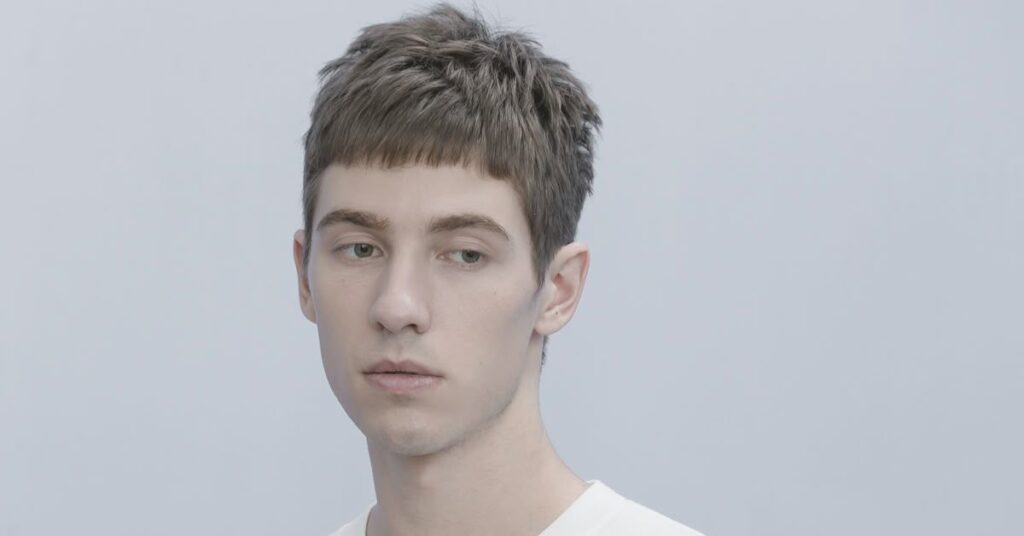
The pixie mod is the short end of the range. The sides and back are cropped close, and the fringe is kept as a small, neat version of the 60s shape. Because there is so little hair, the cut shows the bone structure, so it works best with a defined jawline and cheekbones.
It is also one of the easiest cuts to live with. There is no blow-drying routine and very little product, only a drop of serum for shine. If your goal is a look that needs almost no effort, our list of low-maintenance hairstyles for men has more options like it. The catch is that every uneven line shows at this length, so book a trim every 3 to 4 weeks.
24. Thick Hair Mod

Thick hair is the hardest to turn into a clean mod cut, because the density makes the sides stand out and the whole shape swells into a mushroom. The fix is not to cut it shorter, but to remove weight from inside the hair so the outline stays rounded.
Ask your barber for:
- Thinning from the inside, so the surface layer stays intact and the thinning does not show
- Sides kept a little shorter than the top, so the shape does not widen
- A vented brush at the finish, so air can pass through the hair as it dries
Be careful with thinning scissors. If the hair is thinned too much near the roots, it frizzes and sticks up as it grows out, so ask the barber to thin from the mid-lengths down. Trim every 4 to 6 weeks, because thick hair loses its shape faster than fine hair.
25. Fine Hair Mod
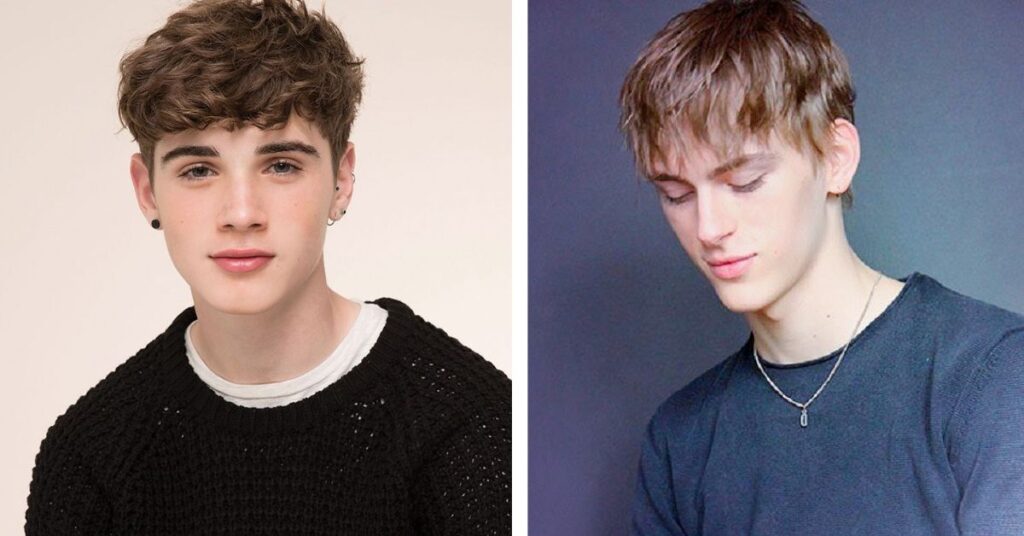
Fine hair works the opposite way from thick hair. Instead of removing weight, the cut tries to keep as much as possible. The edges are cut blunt, because a blunt line makes the ends look thicker, and the layers are kept to a minimum, since every layer takes away a little density.
To add body without weight:
- Apply a thickening mousse to damp hair before you blow-dry
- Dry the roots upward, then let the fringe fall naturally
- Skip heavy oils and waxes, which flatten fine hair within an hour
If your hair is thinning rather than just fine, keep the fringe longer so it covers more of the forehead, and avoid very short sides, which show the scalp. A perm, as in Style 14, is another option for adding body.
26. Messy Mod Cut

The messy mod is the mod cut with the rules turned off. The fringe is still there, but it is cut unevenly and left to fall wherever it wants, so strands cross and stick out. The cut gives the hair permission to look unstyled, which is why it suits men whose hair is naturally unruly.
Do not confuse messy with careless. The shape underneath still has to be sound, with the sides under control and the fringe at the brows, or the result looks like a haircut that needs a trim. If you want more ideas for that loose finish, our messy hairstyles for men go further than this cut does.
To style it, rub a small amount of matte paste between your palms, then scrunch it through dry hair with your fingers. Do not use a comb. Stop as soon as the hair has texture, because more paste makes it look stiff instead of messy.
27. Mod Cut Blonde
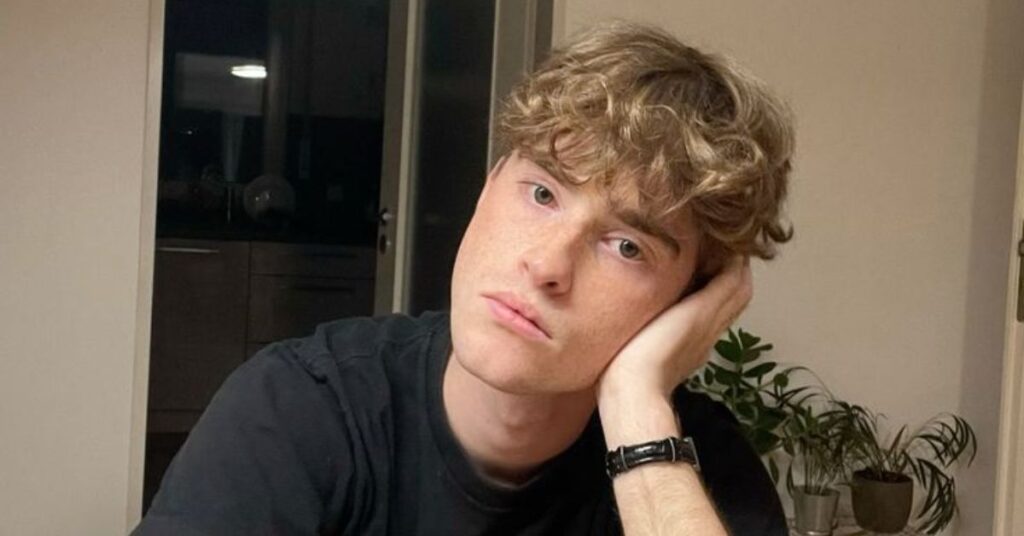
Color shows off a mod cut more than any other change. The layers and the fringe catch the light, so a lighter shade makes every piece of the cut stand out. It works with platinum and with honey blonde, and it also suits hair that is starting to go grey, because light hair hides grey better than dark hair does.
Bleaching is a chemical process and it damages the hair, so go in prepared:
- Book a licensed colorist, not a home kit, especially if your hair is dark
- Ask for a strand test and a patch test before the full color
- Expect to go back every 4 to 6 weeks for the roots
Use a purple shampoo once a week to keep the tone from turning yellow, and a deep conditioner to replace the moisture the bleach removes.
28. Side Swept Mod
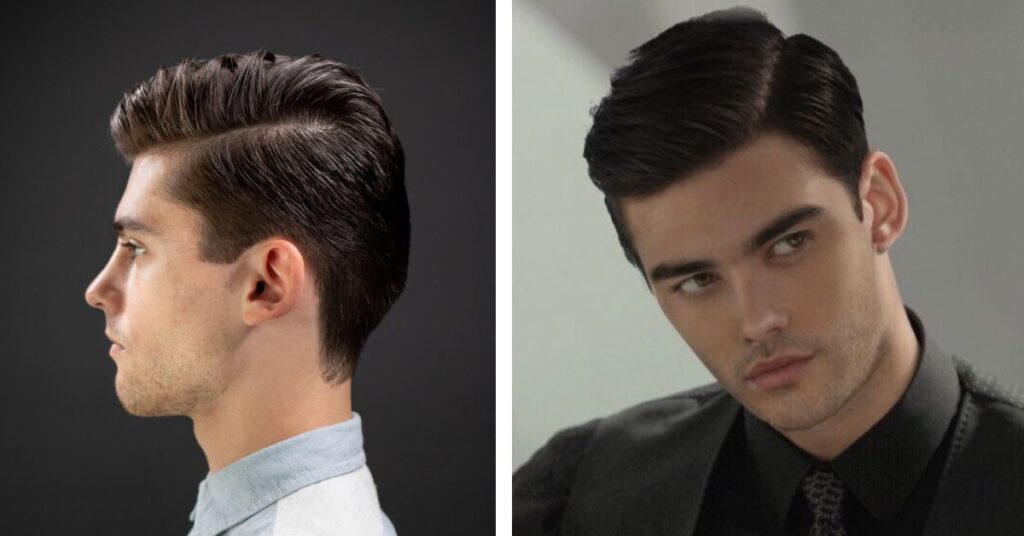
The side-swept mod takes the heavy fringe and pushes it to one side instead of across the brow. The forehead is partly open, which makes the cut feel lighter and easier to wear in a formal setting. It keeps the mod outline without the intensity of a full fringe.
Choose your side before you sit down:
- Sweep it to the side your hair already falls toward, so it does not spring back
- If you have a cowlick at the front, sweep the fringe away from it, not against it
- Ask your barber to cut the fringe a little longer on the side it sweeps toward
Dry the fringe with a blow dryer pointed in the direction of the sweep, then set it with a light-hold spray. A strong spray will make it stiff and lose the movement.
29. Rocker Mod

The rocker mod is the rougher end of the range. The layers are jagged and piecey, and the hair is meant to look slightly oily or lived-in instead of clean. It works on medium-length hair, and it looks best with dark, moody styling and plain clothes. Of all the mod cuts, it cares least about being neat.
The finish comes from a small amount of grooming cream worked into damp hair and left to air-dry. Do not blow-dry it smooth, because the texture is the point. Wash it every 2 to 3 days instead of daily, so the scalp’s natural oil gives the hair some weight, and use less product than you think you need, because too much product turns the lived-in look into a dirty one.
30. Micro Fringe Mod
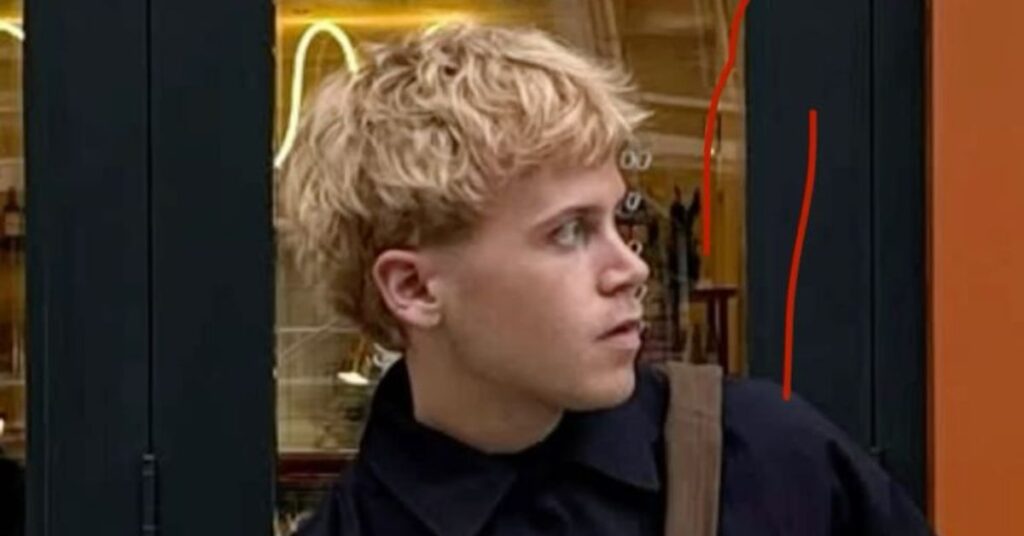
The micro-fringe mod is the shortest and the most daring variation. The fringe is cut well above the eyebrows, usually around the middle of the forehead, while the sides and back stay long. The contrast is sharp, and the cut leaves most of the forehead showing.
Think carefully before you try it, because it is hard to undo. A short fringe takes months to grow out, and during the grow-out phase it sticks out and falls in odd directions. It is also unforgiving on some face shapes. Strong features and a defined jawline carry it better, and a very high forehead or a receding hairline can look exposed.
Keep it flat with a tiny amount of pomade, and book a trim every 3 to 4 weeks, because the line only looks sharp when it is fresh. If you want a softer way in, try a longer fringe first, such as the side-swept mod above. For a gentler version of a short fringe, see how a side-swept fringe sits on the forehead.
Mod Cut vs. Similar Styles: How to Tell the Difference
The mod cut is the most controlled of these four. It keeps a defined fringe and a rounded outline, while the mullet, wolf cut, and shag all break the shape on purpose. Use the table to compare them quickly, then read the two short breakdowns below.
| Feature | Mod Cut | Traditional Mullet | Wolf Cut | Shag Cut |
| Overall Look | Clean and structured | Bold and uneven | Messy and wild | Soft and layered |
| Shape | Balanced and smooth | Short front, long back | Shaggy with volume | Loose and feathered |
| Styling Finish | Polished and neat | Edgy and casual | Natural and textured | Relaxed and airy |
| Hair Length | Short to long | Short to long | Medium to long | Medium |
| Texture Level | Low to medium | Medium | High | Medium |
| Best For | Classic modern style | Statement look | Trendy youth style | Easygoing fashion |
| Work Friendly | Yes | Rarely | Sometimes | Often |
| Maintenance | Moderate | Low to moderate | Low | Low |
| Hair Type | Straight, thick, fine | Straight, wavy | Wavy, curly | Wavy, straight |
| Trend Origin | 1960s Britain | 1980s | Modern trend | 1970s |
Mod Cut vs. Traditional Mullet
The mod cut looks clean and well balanced. It keeps the hair even and sharp from all sides. The traditional mullet looks bold and dramatic. It stays short in the front and long at the back. The mod cut works well for everyday life. The mullet feels more rebellious and playful.
Key differences:
- Mod cut has a neat and structured shape
- Mullet keeps length at the back
- Mod cut suits work and formal settings
- Mullet fits casual and edgy styles
Mod Cut vs. The Wolf Cut
The mod cut focuses on control and polish. It uses smooth lines and a defined shape. The wolf cut looks messy and full of layers. It adds volume with a wild texture. The mod cut feels classic and refined. The wolf cut feels modern and carefree.
Key differences:
- Mod cut looks clean and sharp
- Wolf cut appears textured and layered
- Mod cut needs regular trims
- Wolf cut needs minimal styling
The Barber Blueprint: How to Get the Perfect Cut
A good result starts before you sit in the chair. Know what you want, say it in plain terms, and bring a photo.
Exact Terminology to Use with Your Stylist
Clear words help your barber understand your vision. Simple terms work better than complex language. Mention the length, shape, and finish clearly. This avoids confusion and saves time. To put your choices into words before your appointment, try our barber instruction generator.
Useful terms to say:
- Clean sides with a soft taper
- Natural volume on top
- Sharp or soft fringe
- Light texture, not messy
- Low, mid, or high fade
A sample you can say: “Weighted, textured top with a heavy forward fringe and tapered sides. Scissors on top, with point-cutting at the ends.”
The Importance of Reference Photos
Reference photos make your request clear. They show the exact style better than words. A photo helps match your expectations. It also reduces the chance of mistakes. Always bring one or two clear images.
Master Your Look: Professional Styling & Maintenance
A mod cut holds its shape only if you style and trim it regularly. The routine below takes about five minutes, and the maintenance tips keep the ends from drying out and splitting.
Step-by-Step Daily Styling Routine (Volume & Texture)
A good routine starts with clean hair. Use light products to avoid a heavy look. Focus on control, not stiffness.
Daily styling steps:
- Wash with a gentle shampoo or rinse with water
- Towel-dry and leave hair slightly damp
- Apply a small amount of clay or cream
- Blow-dry while lifting the top for volume
- Finish with fingers for natural texture
Essential Maintenance: Keeping the Shape and Hydration
Book a trim every 4 to 6 weeks to keep the outline, and every 2 to 3 weeks if you have a fade. Use conditioner on the ends after washing, keep blow-dryer heat on low, and go easy on oils, which can weigh down a fringe. If you bleach or perm, space the treatments out and ask a licensed stylist how long to wait between them.
Products for the Mod Look (Clays, Salts, and Oils)
| Product Type | Best For | Hair Type | Finish | How to Use |
| Matte Clay | Strong hold and shape | Thick, straight | Matte | Apply to dry hair for control |
| Styling Cream | Natural movement | Thin, fine | Natural | Use on damp hair |
| Sea Salt Spray | Texture and volume | Straight, wavy | Textured | Spray before blow-dry |
| Lightweight Pomade | Clean classic look | Straight, thick | Soft shine | Use small amount |
| Hair Oil | Hydration and shine | Dry hair | Glossy | Apply 1–2 drops |
| Leave-In Conditioner | Moisture and softness | All types | Natural | Use after washing |
| Volumizing Mousse | Lift and fullness | Thin hair | Light hold | Apply before drying |
| Curl Cream | Definition | Wavy, curly | Natural | Scrunch into damp hair |
Conclusion
Mod hairstyles work best when the cut matches your face shape and hair type. Pick one from the list above, then bring a reference photo and the exact words from the barber section, so you get what you asked for.
After the cut, keep it sharp with light products and a trim every 4 to 6 weeks. If the shape starts to drift, go back to your barber early instead of waiting for it to grow out.
FAQs
Mod hairstyles are clean, rounded cuts with a fringe at the brows and tidy sides, and they began in 1960s Britain. Today they range from the strict 60s original to looser versions such as the Britpop, textured, and wolf mod. Most of them share the fringe and the rounded outline.
Most face shapes can wear one, but the version matters. Oval faces suit almost any mod cut. Square faces look better with a textured or side-swept fringe, round faces with height on top and trimmer sides, and heart-shaped faces with a longer fringe that covers part of the forehead.
Yes, but the cut has to be different. Fine hair looks fuller with blunt edges and very few layers, because every layer removes some density. Use a thickening mousse on damp hair, dry the roots upward, and skip heavy oils and waxes. If your hair is thinning, keep the fringe longer.
Every 4 to 6 weeks for most mod cuts. Cuts with a taper or a fade show growth sooner, so book a visit at 3 to 4 weeks for a taper and 2 to 3 weeks for a fade. Very short fringes, such as the pixie and micro-fringe mods, also need a trim every 3 to 4 weeks.
Yes, if you pick the right version. The short mod, modern mod, layered mod, and side-swept mod suit an office. The messy, rocker, and wolf mods suit casual settings better. Most take about five minutes to style with one light product.

Ryan Cole writes about men’s grooming, covering barbering techniques, current trends, and how styles adapt across different hair types and face shapes. He focuses on practical, wearable advice: how to describe a cut to your barber and how to maintain it day to day.