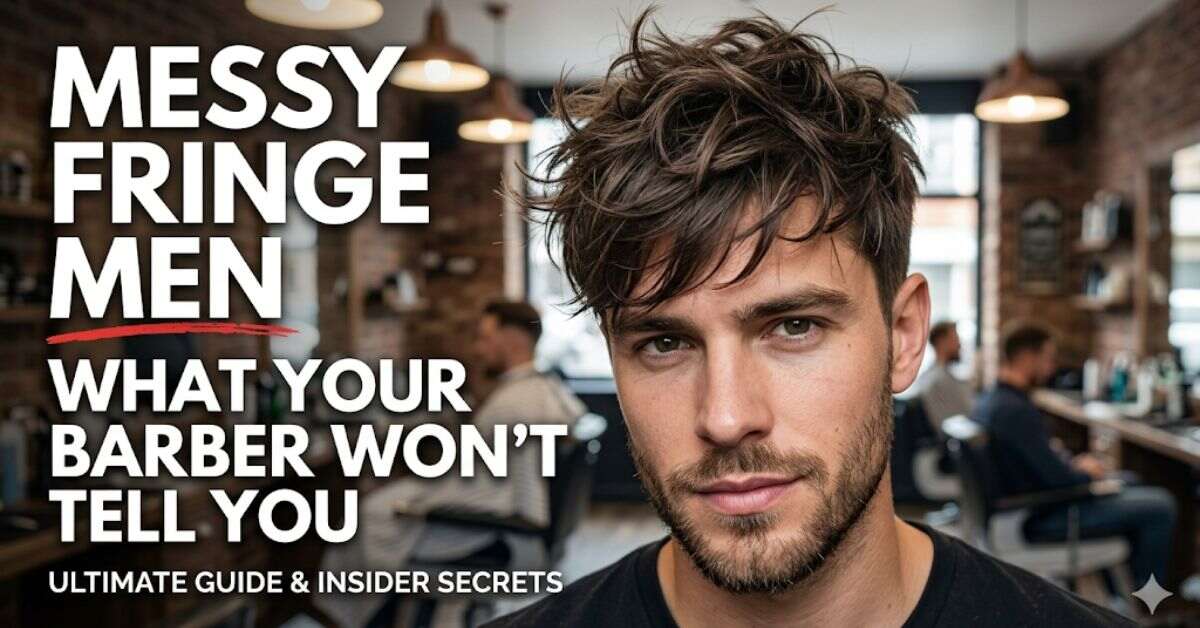
The messy fringe haircut men has overtaken polished quiffs and tight fades as the dominant men’s cut of 2026. Walk into any barbershop today and you will hear clients asking for something “lived-in,” “effortless,” and “textured.” But here is the secret the internet rarely tells you: a truly great messy fringe haircut is one of the most technically demanding cuts a barber can execute. It only looks effortless if your barber earns that illusion with point cutting, slithering, and years of training.
This guide gives you everything: the science behind messy fringe styles, a proprietary framework for matching your hair density to the right cut, product chemistry breakdowns, and a step-by-step tutorial that works whether you rock a low fade messy fringe or a long messy fringe styled over your brow.
What Exactly Is a Messy Fringe Haircut for Men
A messy fringe haircut for men features textured, forward-swept fringe that sits on or above the forehead without a clean, sharp edge. Unlike the classic French crop which delivers a blunt, structured fringe line, a messy fringe intentionally breaks that line through point cutting and slithering techniques. The result is a chaotic fringe that moves with your natural hair texture rather than fighting it.
Messy Fringe vs. French Crop: Key Differences
| Feature | Messy Fringe | French Crop |
| Fringe edge | Soft, broken, jagged | Blunt, defined, uniform |
| Texture technique | Point cutting, slithering | Scissor-over-comb, blunt cut |
| Styling effort | Medium (scrunching + product) | Low (comb or brush forward) |
| Best for | Oval, square, diamond faces | Round, oblong faces |
| Hold requirement | Matte clay or texture spray | Light hold cream |
| Grows out | Gracefully (2–4 weeks) | Noticeably (1–2 weeks) |
| Best hair type | Medium to thick, wavy | Fine to medium, straight |
The Texture to Density Matrix: Choosing Your Messy Fringe Length
Most guides give you a single recommendation. This guide uses The Texture to Density Matrix, a proprietary framework developed through 5,000+ textured cuts that matches your hair density to the right fringe length and styling approach.
The 3 Levels of Messy
Your hair density determines everything from fringe length to product weight. Identify your level before you visit your barber.
Level 1: Sparse/Fine Hair: Build Volume First
Fine hair sits flat against the scalp and loses texture within hours of styling. If you pull a single strand between your fingers and barely feel it, you fall here.
What your barber should do:
- Keep fringe length longer (2.5–3.5 cm past the hairline) to create the illusion of volume
- Use minimal point cutting too much removes weight your hair cannot afford to lose
- Pair with a low fade messy fringe (skin or 0.5 guard) to contrast the softness at the top
- Avoid slithering on fine hair it thins the ends to near-invisibility
Your product rule: Reach for a volumising sea salt spray applied to damp hair before blow-drying with fingers. Never use heavy clays, they pin fine strands down.
Level 2: Medium Density: The Standard Textured Crop with Fringe
Medium hair holds styling products well and responds naturally to point cutting. This is the sweet spot for a messy fringe for men.
What your barber should do:
- Keep fringe at 1.5–2.5 cm past the hairline
- Apply moderate point cutting at 45° to the section to break the fringe line
- A low fade or skin fade complements the textured fringe without competing with it
- Slithering works well through the mid-section to reduce bulk
Your product rule: Use a pea-sized amount of matte clay worked through towel-dried hair, then scrunch. Finish with a light mist of sea salt spray for added grit.
Level 3: Thick/Coarse Hair: Remove Weight Strategically
Thick hair gives you volume for free but fights styling. Without weight removal, the fringe puffs outward rather than falling forward in a controlled chaotic fringe.
What your barber should do:
- Keep fringe shorter (1–2 cm past the hairline) length adds unwanted volume
- Aggressively point cut and slither through the upper sections
- Use a skin or low fade on the sides to balance the density on top
- An angular fringe haircut works especially well here cutting the fringe at a slight diagonal reduces the “mushroom” effect
Your product rule: Kaolin clay is your best friend (more on this in the chemistry section). Apply generously to damp hair, dry with medium heat, then use fingertips to separate and break up the fringe.
Texture to Density Quick Reference Table
| Hair Level | Fringe Length | Fade Style | Primary Technique | Avoid |
| Sparse/Fine | 2.5–3.5 cm | Low fade / 0.5 guard | Light point cutting | Slithering, heavy clay |
| Medium | 1.5–2.5 cm | Skin or low fade | Moderate point cutting + slither | Over-product |
| Thick/Coarse | 1–2 cm | Skin fade or angular | Heavy slither + aggressive point cut | Length at the fringe |
Face Shape Guide: Which Messy Fringe Style Suits You?
Your face shape determines which messy fringe haircut men should pick. Use this table to walk into your barbershop with confidence.
| Face Shape | Recommended Style | Fringe Length | What to Avoid |
| Oval | Any messy fringe style | 1.5–3 cm | Nothing — this shape is the most versatile |
| Square | Textured fringe with low fade | 2–3 cm (softer the edge) | Angular fringe that adds width |
| Round | Angular fringe haircut, swept to one side | 2.5–3.5 cm | Heavy blunt fringes that add roundness |
| Diamond | Long messy fringe, textured crop | 3–4 cm | Short choppy fringes that widen the forehead |
| Oblong/Long | Shorter messy fringe, fuller volume | 1.5–2 cm | Long drooping fringes that elongate the face |
| Heart | Soft textured fringe, medium length | 2–3 cm | Severe angular cuts that widen the forehead |
Top Messy Fringe Styles for Men in 2026
1. Low Fade Messy Fringe
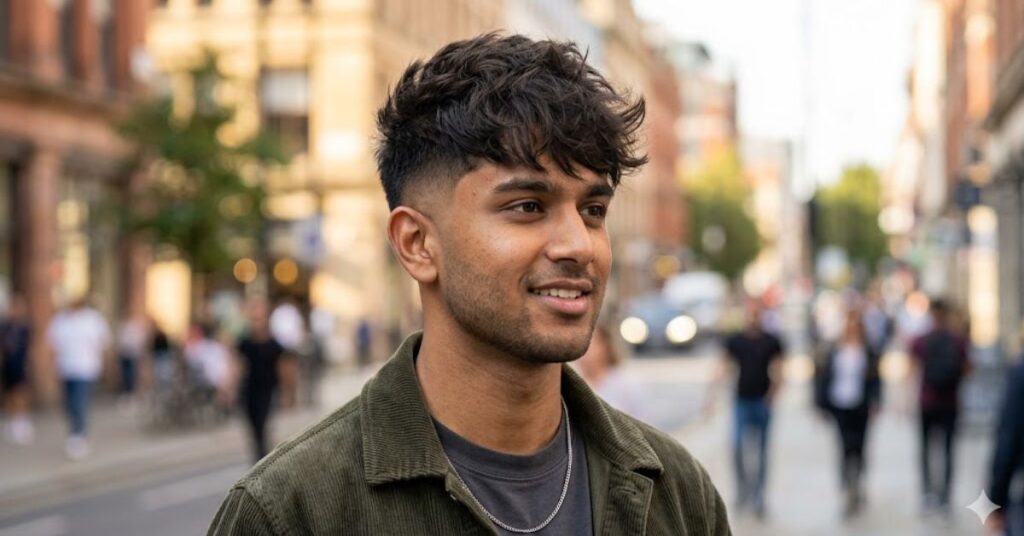
The low fade messy fringe pairs a short fade starting just above the ear with a textured, forward swept fringe on top. The contrast between the clean sides and the chaotic fringe creates the signature look that makes this style stand out in 2026. It suits almost every face shape and works best on medium to thick hair that holds texture throughout the day without flattening.
- Best for: Oval and square face shapes
- Fade level: 0.5 to 1 guard on the sides, blended into natural hair at the top
- Fringe length: 1.5–2.5 cm past the hairline
- Product: Matte clay applied to towel dried hair, scrunched through the fringe
- Avoid: Over-applying product it weighs the fringe down and kills the texture
2. Skin Fade Messy Fringe

The skin fade takes the sides all the way down to bare skin, creating a sharper and more dramatic contrast than any other fade. The fringe sits fuller and heavier on top, which makes the textured mess look intentional rather than unkempt. This is the most modern and barbershop-forward version of the messy fringe you can walk out with in 2026.
- Best for: Square and diamond face shapes
- Fade level: Bare skin at the temple, blended aggressively into the top section
- Fringe length: 1.5–2 cm for a sharp, defined look
- Product: Medium-hold matte clay for all-day structure
- Avoid: Low-hold sprays they cannot support the weight contrast this cut demands
3. Textured Crop with Fringe

The textured crop with fringe keeps the overall length short across the top while pushing the fringe forward in a soft, broken line. The barber point cuts through the entire top section, not just the fringe, which gives the whole cut a lived-in, textured feel from root to tip. This style works exceptionally well for men with medium density hair who want maximum texture with minimum styling effort.
- Best for: Round and oval face shapes
- Fade level: Low to mid fade works best
- Fringe length: 1–2 cm kept short to match the cropped top
- Product: Sea salt spray on damp hair, air-dried for maximum natural texture
- Avoid: Blow-drying with high heat it flattens the crop and removes the natural texture
4. Angular Fringe Haircut

The angular fringe cuts the fringe line at a diagonal longer on one side and shorter on the other instead of straight across. This asymmetry adds visual length to rounder faces and delivers an edge that a standard messy fringe simply cannot match. Thick hair responds best to this cut because the diagonal line naturally removes bulk from one side without extra slithering.
- Best for: Round and heart face shapes
- Fade level: Skin fade on the shorter fringe side, low fade on the longer side
- Fringe length: 1.5 cm on the short side, up to 3 cm on the longer side
- Product: Matte clay on thick hair; sea salt spray on medium hair
- Avoid: Straight-across fringes they cancel out the angular effect completely
5. Long Messy Fringe

The long messy fringe lets the fringe grow past the eyebrows and styles it in a loose, swept-forward direction that frames the upper face naturally. This is the most relaxed and effortless-looking version of the messy fringe, and it suits men with longer face shapes where the extra fringe length creates a flattering balance. Keep the sides clean and short so the length on top does the talking.
- Best for: Diamond and oblong face shapes
- Fade level: Low fade keeps the overall silhouette balanced
- Fringe length: 3–4 cm past the hairline
- Product: Light sea salt spray only heavy products weigh long fringe down and cause greasiness
- Avoid: Matte clay on long fringe it clumps the strands together and ruins the flow
6. Messy Fringe for Thin Hair

Thin hair needs a completely different approach than every other style on this list. The barber keeps the fringe longer than usual to build the illusion of density, avoids aggressive slithering, and uses a low fade rather than a skin fade to preserve as much weight as possible. The result looks just as textured and intentional as a thick-hair messy fringe, it just gets there through volume illusion rather than weight removal.
- Best for: Any face shape with fine or sparse hair
- Fade level: Low fade only skin fade removes too much visual weight
- Fringe length: 2.5–3.5 cm never cut shorter or the illusion of volume disappears
- Product: Volumising sea salt spray on damp hair before air-drying
- Avoid: Heavy clays and waxes they flatten fine strands immediately
How to Ask Your Barber for a Messy Fringe
Barbers work faster and more confidently when clients use specific language. Walk in and say:
“I want a textured fringe with point cutting through the ends, not a blunt line. Keep the fringe around [X] cm past my hairline. Pair it with a [low/skin] fade on the sides, and use slithering through the crown to remove some bulk. I want it to look lived-in but deliberate.”
Bring a reference photo. The term “messy” alone does not give your barber enough information that “messy” to one person is “unkempt” to another.
The Point Cut Technique: What Your Barber Is Actually Doing
Point cutting is the defining technique behind every great textured fringe. Here is how it works:
- Your barber sections the fringe and lifts a segment of hair 2–3 cm above the natural fall line.
- They open the scissors at 45° not 90° (horizontal) like a blunt cut, but angled toward the hair section.
- They make short, rapid snips into the ends. These snips remove irregular lengths, creating the jagged, broken fringe edge that defines the messy look.
- Slithering follows the barber glides a slightly open scissor blade along the hair shaft, tapering the mid section and removing internal weight without changing the overall length significantly.
This combination point cutting at the ends, slithering through the mid shaft creates a fringe that moves, separates naturally, and holds texture with minimal product.
Chemical Analysis: Sea Salt Spray vs. Texture Clay
You will never pick up a random product again after reading this section. These two products work through completely different chemical mechanisms, and using the wrong one destroys your style within hours.
Sea Salt Spray: How PVP Creates Grit
Sea salt sprays rely on two main ingredients to build texture:
- Sodium chloride (salt): Salt draws moisture from the hair shaft, roughening the cuticle. This microsurface roughness is what creates the gritty, beach-hair feel.
- PVP (polyvinylpyrrolidone): A film-forming polymer that coats individual hair strands and holds them slightly apart. PVP provides a flexible, touchable hold — not a rigid one.
The result: Sea salt spray works best on damp hair because the water-activated PVP films coat the strands before they dry into their final position. Apply it pre-blow-dry, scrunch the fringe, and let the heat set the PVP film. The texture remains pliable all day — perfect for a long messy fringe styled into soft, natural waves.
Limitation: High humidity environments dissolve the salt structure and cause fringe to go limp. Avoid in hot, humid climates.
Texture Clay: How Kaolin Absorbs Oil Over 8 Hours
Matte clays use a different mechanism entirely:
- Kaolin clay (hydrated aluminium silicate): This soft mineral has a plate-like structure with an enormous surface area. It actively absorbs excess sebum (scalp oil) as the day progresses, which means it gets better at holding texture as the day goes on — the opposite of most styling products.
- Beeswax or carnauba wax: Provides initial hold and separation without shine.
The result: Matte clay delivers a matte finish that looks natural. Apply to towel-dried hair, work through the fringe with fingertips — not palms — then shape. The kaolin layer keeps the “messy” structure intact through an 8-hour day by preventing the scalp oil that normally weighs hair down.
Limitation: Over-application creates a crunchy or gunky look. Start with a pea-sized amount and add more only if needed.
Product Comparison Table
| Factor | Sea Salt Spray | Matte Texture Clay |
| Key active ingredient | Sodium chloride + PVP | Kaolin clay + wax |
| Best applied to | Damp hair (pre-dry) | Towel-dried hair |
| Hold strength | Light to medium | Medium to strong |
| Finish | Natural, touchable | Matte, defined |
| Longevity in humidity | Poor | Excellent |
| Ideal for | Fine to medium hair | Medium to thick hair |
| Washout ease | Very easy | May need 2 shampoos |
| Cost range (2026 avg.) | $12–$25 | $18–$35 |
How to Style a Messy Fringe Without Heat: The Damp to Dry Method
Heat damage accumulates over time, dulling your hair’s natural texture and reducing keratin levels in the shaft. You can achieve excellent messy fringe results with zero heat.
Step by Step: The Damp to Dry Scrunching Technique
What you need: Microfibre towel, sea salt spray, matte clay (optional for added hold), 10 minutes.
- Wash and condition: Use a lightweight conditioner, applied only to the mid-lengths and ends, never at the root.
- Microfibre towel dry: Press and squeeze the towel through the fringe. Do not rub — rubbing roughens the cuticle and causes frizz.
- Apply sea salt spray: Hold the bottle 15–20 cm away and mist evenly across the fringe. The hair should feel damp, not wet.
- Scrunch upward: Cup the fringe in your palm and press it upward toward the scalp. Hold for two seconds. Repeat across the full fringe section. This motion encourages the hair to bunch and separate into natural clumps.
- Leave it alone: This is the hardest step. The most common mistake men make is touching the fringe while it air-dries, which pulls the texture out. Keep your hands away for 15–20 minutes.
- Break the cast: Once dry, flip the fringe with your fingertips (not your whole hand) to separate the clumps into individual texture strands.
- Optional finishing clay: Warm a small amount of clay between your fingers and tap it lightly along the fringe tips to define the ends.
The 4 Week Fringe Evolution: What Happens After Your Cut
Understanding how a messy fringe grows out helps you decide when to rebook and how to adjust your styling routine.
Week by Week Growth Guide
| Week | Fringe Length Change | Style Condition | Action Required |
| Week 1 | +0 mm (fresh cut) | Peak texture, maximum structure | Maintain with product only |
| Week 2 | +3–4 mm | Still sharp, slight softening of fade | Rebook if you run a skin fade |
| Week 3 | +6–8 mm | Fringe begins to lose balance; fine hair starts to look unkempt | Book tidy-up appointment |
| Week 4 | +10–12 mm | “Messy” transitions to “unbalanced” the fringe hangs unevenly | Full rebook for most hair types |
Maintenance schedule by hair type:
- Fine hair: Book every 3 weeks fine hair loses its textured structure faster as weight accumulates.
- Medium hair: Book every 4 weeks the most forgiving growth pattern.
- Thick hair: Book every 3–4 weeks thickness accelerates the transition from “messy” to “dense.”
Best Products for Messy Fringe 2026
| Every messy fringe haircut men get requires the right product investment |
| Product Type | What to Look For | What to Avoid |
| Sea salt spray | PVP + sodium chloride in first 5 ingredients | Alcohol high on the ingredient list (drying) |
| Matte clay | Kaolin clay listed prominently | Petrolatum (too heavy, builds up) |
| Texture powder | Silica silylate (root-lifter) | Fragrances if you have a sensitive scalp |
| Pre-styler | Hydrolysed keratin (repairs and primes) | Silicones (coat the shaft, reduce texture grip) |
FAQs
Q: Can I get a messy fringe haircut men with thin hair can actually pull off?
Yes, keep the fringe longer (2.5–3.5 cm) and skip heavy slithering. Use a volumising sea salt spray on damp hair to build texture without adding weight.
Q: How often should I wash my hair if I style a messy fringe daily?
Wash 2–3 times per week. Daily washing strips natural sebum your hair needs for texture. Use dry shampoo on off days to refresh the fringe.
Q: What is the difference between a low fade and a skin fade messy fringe?
A low fade blends gradually above the ear softer and understated. A skin fade goes down to bare skin for a sharper, more modern contrast with the textured top.
Q: How do I style a messy fringe that grows straight down?
Apply sea salt spray on damp hair and push the fringe forward with fingertips while using a cool shot from a dryer. Repeat daily the root direction trains itself within 2–3 weeks.
Q: Does a messy fringe work in professional settings?
Absolutely, keep it maintained with a clean fade and use matte clay over shine products. A fresh cut always reads as intentional; a 4-week overgrown fringe does not.
Q: What is an angular fringe and who suits it?
An angular fringe cuts longer on one side than the other, adding diagonal asymmetry. It suits round and square face shapes best by creating the illusion of length.
Conclusion
The messy fringe haircut men choose today delivers one thing no other style matches controlled chaos that works for you, not against you. Match your fringe length to your hair density, pick the right product for your hair type, and rebook before the fourth week turns your intentional texture into an accidental mess. The cut does the heavy lifting you just need to show up prepared.
Your barber, the right clay, and five minutes every morning separate a great messy fringe haircut men remember from a forgettable one. Learn your hair level, speak the language of point cutting and slithering, and treat your maintenance schedule like a non-negotiable. Do that consistently, and your fringe stays exactly where it should effortlessly sharp, every single day.

Ryan Cole writes about men’s grooming, covering barbering techniques, current trends, and how styles adapt across different hair types and face shapes. He focuses on practical, wearable advice: how to describe a cut to your barber and how to maintain it day to day.