

A bad haircut can leave you stuck with uneven sides, a choppy fade, or much less length than you wanted. Knowing how to fix a bad haircut the right way means most mistakes can be improved without making things worse.
You just left the barber chair, looked in the mirror, and felt your heart sink. Take a breath. At least once in everyone’s life, this happens.
Hair grows about half an inch each month, so most mistakes fade fast. Until then, you can use simple styling tricks, small fixes at home, or a quick visit to a good barber. By the end of this guide, you’ll know exactly how to fix it, whether at home or with a pro.
First, Assess the Damage: What Exactly Went Wrong?
Before you fix anything, take a calm look at the mirror. Don’t grab the scissors yet. Most bad haircuts have one clear problem, and once you spot it, the fix gets much easier.
Check your hair in good light. Be sure to examine all three sides and the back. Use a second mirror if you can. Find what feels “off” and write it down in your head.
Too Short on Top?
If the top was cut shorter than you wanted, styling can sometimes make the difference less noticeable while you wait for it to grow.
Uneven Sides or Lines?
Stand straight and look at both sides. Is one side higher? Is the neckline crooked? Uneven cuts look worse in bright light. Small differences often go unnoticed by others. Big ones need a barber’s touch.
Choppy or Harsh Transitions?
Sometimes the sides look fine, but the blend is rough. You may see a hard line where short hair meets long hair. This makes the cut look blocky. A good barber can soften it with a quick blend.
Wrong Style for Your Face Shape?
A cut can be clean and still look wrong on you. Round faces often look wider with too much side volume. Long faces can look longer with extra height on top. Ask yourself if the shape of the cut matches your face.
Quick Self-Assessment Checklist
Use this list to name the problem:
- Is the top shorter than you asked for?
- Do both sides look even when you stand straight?
- Is the neckline clean and balanced?
- Does the blend look smooth, or can you see a harsh line?
- Does the style suit your face shape?
- Is the cut fine, but you just don’t like how it’s styled?
- Can you fix it with styling, or does it need a barber?
Wait Before You Make Another Cut
A fresh haircut almost always looks worse in the first hour. Your hair is still stiff from the product. The lines are sharp. Your eyes aren’t used to the new shape yet. This is normal, and it fools a lot of men.
Give your haircut some time before making another cut. After washing and styling it yourself, you may get a better idea of how the haircut actually looks and whether it needs correcting.
Pro Tip: Wait 24 hours before taking clippers to your hair. A quick fix made in panic can turn a small problem into a big one.
Why You Should Wait Before Doing Anything
Hair can’t be glued back on. Once you cut more, there’s no going back. Waiting costs you nothing. It only saves you from a bigger mistake.
What Looks Bad Wet vs. Dry
Wet hair looks shorter and flatter. It clumps together, and every uneven line shows. Dry hair puffs up and hides small flaws. Always judge your cut when it’s fully dry.
How Your Hair Settles in 1-2 Days
Right after a cut, your hair is stiff and heavy with product. After a wash or two, it relaxes and falls into place. Cowlicks calm down. Harsh edges soften. The cut starts to look like it should.
When You Should Act Immediately
Some problems can’t wait. If you see a bald patch, a deep chunk missing, or a badly crooked line, call your barber right away. The same goes for a big event tomorrow. Some barbers or shops may offer a complimentary correction, but policies vary, so ask before booking the fix.
How to Fix a Bad Haircut at Home (Step-by-Step)
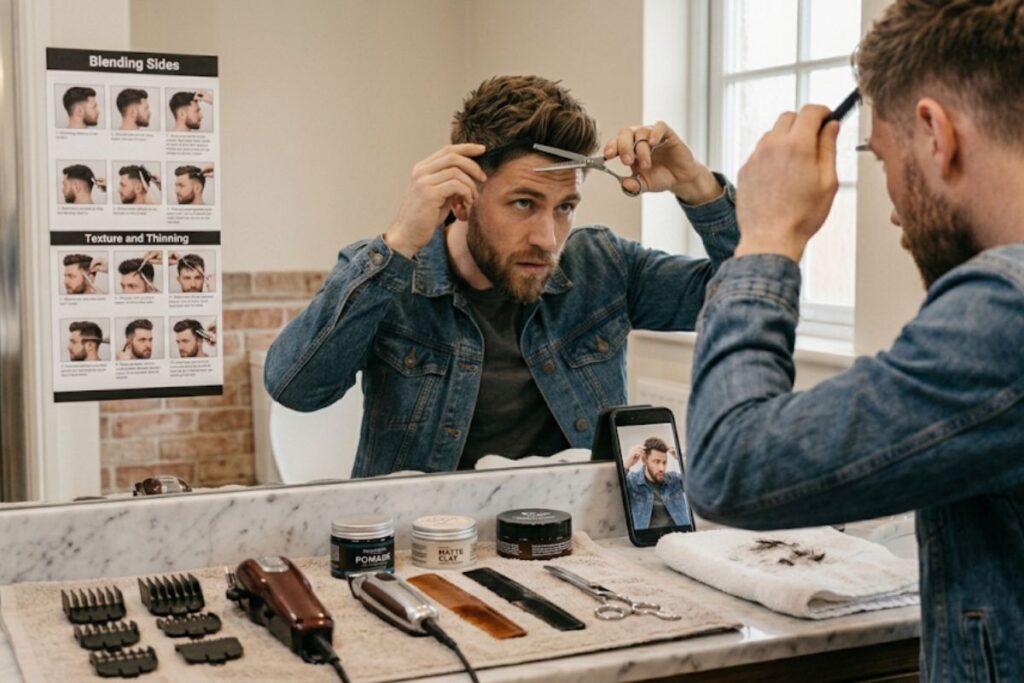
Sometimes a small fix at home is all you need. Go slow and keep it simple. You can always cut more later, but you can never put hair back.
Here is the plan in five short steps. Follow them in order. Take breaks to check your work in the mirror.
Step 1: Gather the Right Tools
The right tools make the job much easier. Set everything up before you start.
- Clippers with guards in different sizes
- Sharp hair scissors (not kitchen scissors)
- A fine-tooth comb for lifting and checking length
- The back of your head is visible in two mirrors
- Good light and a clean towel around your neck
Stand in front of the big mirror and hold the second one behind you. Now you can see every angle.
Step 2: Start with the Sides and Back
Begin where the mistake is smallest. Use a longer guard first. Move the clippers upward in slow, smooth strokes. Keep both sides even. Check often. Clean up the neckline last, and keep it natural rather than too sharp.
Step 3: Blend the Transition (Fade Fix)
A harsh line is the most common flaw. Remove the guard and use the clippers in a gentle flicking motion. This softens the line where short hair meets long hair. Or use the comb and scissors. Comb the hair up, then trim only the tips that stick out. Work in small sections.
Step 4: Trim the Top with Caution
The top is the riskiest part. Take very little off. Comb a small section straight up between two fingers. Snip just the tips. Then check again. If the top is already short, skip this step. Let it grow instead.
Step 5: Texturize to Hide Mistakes
Texture makes small flaws disappear. Point-cut the ends by snipping into them at an angle. This breaks up blunt lines. Then add a little matte clay or sea salt spray. The product should be applied to dry hair by rubbing it between your palms. The messy, natural look hides a lot.
What NOT to Do (Common DIY Disasters)
Most home fixes go wrong because of rushing. Avoid these mistakes:
- Don’t cut your hair when it’s soaking wet
- Don’t use kitchen scissors or dull blades
- Don’t fix it in bad lighting
- Don’t cut more just because one side looks off
- Don’t try a shaved line or a sharp fade for the first time on yourself
- Don’t fix the cut in a panic right after you leave the barber
- It doesn’t matter if it looks “good enough”
If you feel unsure at any point, stop. A barber can fix a small mistake, but a big one takes longer to repair.
Styling Tricks to Hide a Bad Haircut (No Cutting Needed)
You don’t always need clippers to fix a bad cut. Good styling can hide uneven lines, short spots, and harsh edges. It takes only a few minutes and a little product.
The trick is to change how your hair sits, not how long it is. Add texture. Change your part. Move the eye away from the problem. You can do this with the following styles and products.
Best Hairstyles to Camouflage a Bad Cut

| Style | Best For Hiding | How to Do It |
| Messy Texture / Bedhead Look | Uneven top, choppy ends, harsh lines | Rub a little clay in your palms. Scrunch it through dry hair. Don’t comb it neatly. |
| Side Part with Volume | Uneven sides, short spots on one side | Part your hair on the side with more length. Blow-dry the top up and over. |
| Slick Back / Pompadour | Hair that’s too long on top, blocky layers | Apply pomade to damp hair. Comb it back. Use a blow dryer for lift at the front. |
| Buzz Cut (The Nuclear Option) | Almost everything, including bald spots and bad blends | Make sure the length is uniform by asking a barber to cut it for you. |
The buzz cut is your last resort. It fixes nearly every mistake, but you can’t undo it. Try the other styles first.
Best Products for Men in 2026
The right product can do half the work. Pick one based on what your hair needs.
| Product | Best For | Finish | Hold | Recommended Brands |
| Clay | Adding texture and hiding uneven ends | Matte | Strong | American Crew Fiber, Hanz de Fuko Claymation |
| Pomade | Slick, neat styles and taming rough edges | Shiny or natural | Medium to strong | American Crew, Layrite |
| Sea Salt Spray | Adding volume and a beachy look | Matte, rough | Light | Surf Spray by Bumble and Bumble, Not Your Mother’s |
| Hair Fibers | Covering thin spots or short patches | Natural, matte | Light to medium | Toppik, Caboki |
| Dry Shampoo | Oily roots and extra grip on flat hair | Matte | Light | Batiste, Dove Men+Care |
| Texture Powder | Instant volume and lift without weight | Matte | Medium | Kevin Murphy Powder Puff |
| Matte Paste | Natural, no-shine finish | Matte | Medium to strong | Baxter of California, Layrite |
How to Use Each Product Correctly
People tend to use too much often. Start small. You can always add more.
- Clay and pomade: Take a pea-sized amount. Put your palms on it to make it smooth. Starting at the back, work forward. Finish at the front so it doesn’t look heavy.
- Sea salt spray: Spray it on damp hair. Scrunch it with your fingers. A diffuser or air drying will do the trick.
- Hair fibers: Shake a small amount onto thin or short areas. Pat it in gently. Apply light hairspray to hold it in place.
- Dry shampoo: Spray it at the roots from about six inches away. Wait a minute. Massage it in with your fingertips. It adds grip and lift right away.
When to Go Back to the Barber (And How to Handle It)
Some cuts can’t be fixed at home. Consider hiring a professional if the damage is severe. There’s no shame in it. Barbers see this all the time, and most of them want you to leave happy.
Stay calm and stay kind. A friendly tone gets you much further than an angry one. Below, you’ll find simple ways to ask for a fix, plus scripts you can use word for word.
How to Politely Ask for a Fix
Wait a day or two first. Let your hair settle. Then call or message the shop and say you’d like a quick touch-up. Be clear about what bothers you. Point to one or two things, like “the left side looks shorter.” Vague comments like “I just don’t like it” are hard to fix.
Can You Get a Better Barber if You Stay with the Same One?
Start with the same barber if the cut was mostly fine. What they did is well known, and they can fix it quickly. Most will do it for free. Go to a new barber if you feel rushed, ignored, or unhappy with the shop. A new barber can also provide you with a fresh perspective. Just be honest about what happened.
What to Say: Exact Scripts for Men
Keep it short, polite, and specific. The following lines might be of use to you.
If you want a small fix:
“Hi, I got a cut here yesterday. I really like the shape, but the left side looks a little shorter than the right. Could you even get it out?”
If the blend looks harsh:
“Thanks for the cut. The fade is a bit too sharp for my taste. Could you soften the blend around the sides?”
If it’s too short:
“Despite my expectation, I ended up with a much shorter haircut. Can you help me make it look neat while it grows back?”
If you’re going to a new barber:
“My last cut went wrong. Here’s a picture of what I wanted. Can you fix the shape without making too many cuts?”
A quick tip: Bring a photo every time. It’s the easiest way to get the same picture in your head and the barber’s.
When to Ask for a Refund
Ask for a refund if the barber ignored your request. The same goes if they refuse to fix the cut or the result is far from what you agreed on. Stay polite and keep it simple.
“I’m not happy with the result, and I’d like to talk about a refund or a free fix. What can we do?”
Many shops would rather fix the cut than lose a customer. If they say no, don’t argue. Just leave a fair review and move on.
How to Find a Better Barber Next Time
Look at real work, not just reviews. Check Instagram or the shop’s page for photos of cuts like yours. Ask friends who have hair like yours. Book a short chat before your first cut. A good barber will listen, ask questions, and explain their plan. Then you are in good hands.
Fixing a Bad Haircut by Hair Type
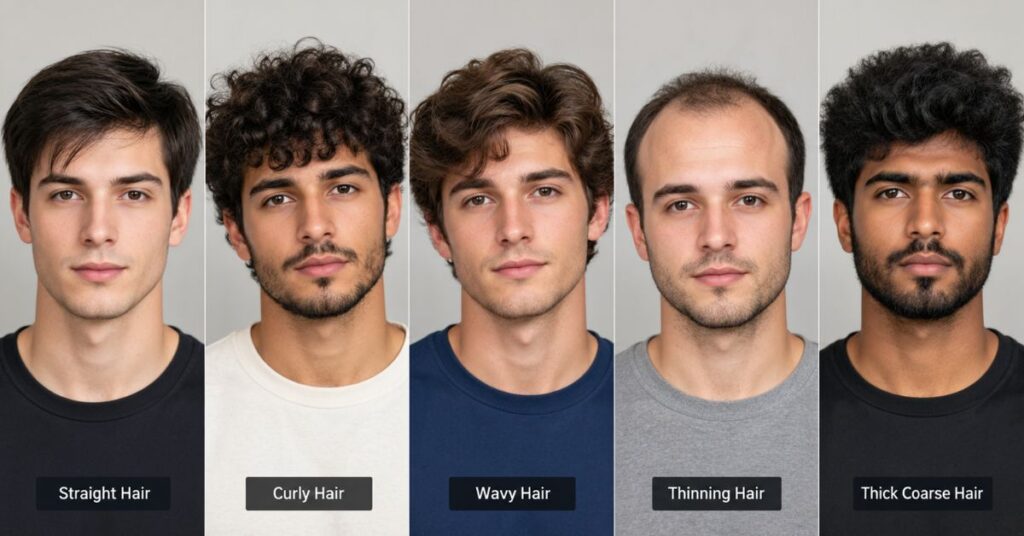
Not every fix works for every head. Straight hair moves differently than curly hair. Thick hair hides mistakes better than thin hair. Knowing your hair type helps you pick the right fix fast.
Below are simple tips for each hair type. Try the ones that match your hair first.
Straight Hair Fixes
Straight hair shows every flaw, since it lies flat and close to the head.
- Use a matte clay to add texture and break up straight lines
- Try a side part to shift focus away from uneven spots
- Blow-dry with a round brush to add lift and hide short areas
- Avoid heavy gels, since they make flat spots look even flatter
Curly Hair Fixes
Curly hair shrinks when it dries, so a “bad” cut often looks better once it’s fully dry and styled.
- Let curls air-dry before judging the cut
- Use a curl cream to define shape and hide uneven pieces
- Scrunch hair upward instead of combing it, which breaks the curl pattern
- Pick a curl-friendly style, like a curly fringe, to draw attention to the top
Wavy Hair Fixes
Wavy hair sits between straight and curly, so it hides small flaws fairly well.
- Use sea salt spray to boost natural texture and add movement
- Scrunch damp hair to bring out the wave pattern
- Avoid flattening it with a comb, since that shows uneven lines
- Try a messy, tousled look to camouflage rough spots
Thinning Hair Fixes
Thinning hair shows scalp and short patches more easily, so extra care helps.
- Use hair fibers to add thickness in sparse areas
- Keep the sides shorter than the top for better balance
- Avoid heavy products that weigh hair down and reveal thin spots
- Ask your barber for a style that adds height at the crown
Thick/Coarse Hair Fixes
Thick hair hides mistakes best, since there’s more hair to work with.
- Use a strong-hold clay or pomade to control volume
- Try a lower fade to balance out extra thickness
- Texturize with scissors to remove bulk and soften harsh lines
- Be patient, since thick hair often needs a full wash cycle to settle into place
How Long Will It Take to Grow Out?
If nothing else works, time is the real fix. Hair grows back on its own. It just takes patience. Knowing the timeline helps you plan your next few weeks with less stress.
Below is a simple breakdown of growth speed, timelines, and what to expect at each stage.
Average Hair Growth Rate (½ inch per month)
In general, hair grows about half an inch per month. Each year, that’s around six inches. Growth speed can vary a little from person to person, based on genetics, age, and health.
Timeline for Short vs. Medium vs. Long Hair
| Starting Length | Bad Cut Type | Time to Grow | What You’ll Notice |
| Short (Buzz, Crew) | Uneven fade, too short sides | 1–2 months | Enough length to style with product |
| Short-Medium | Choppy top, harsh lines | 3–4 months | Hair covers ears, more styling options open up |
| Medium (4–6 inches) | Wrong layers, uneven ends | 6 months | Enough length for a side part or slick back |
| Long (6+ inches) | Bad shaping, too much thinning | 10–12 months | Full length restored, most damage fully grown out |
Stages of Growth (What to Expect Week by Week)
| Time Frame | What Happens | What You Can Do |
| Week 1 | Hair is still short and stiff. Lines and mistakes are most visible now. | Style it, use product, wait |
| Week 2–3 | Hair softens a little. Styling starts to hide small flaws. | Get a light clean-up if needed |
| Week 4 (1 month) | About half an inch of new growth. Products can now cover uneven spots. | Try new styles, add texture |
| Week 8 (2 months) | Roughly one inch of growth. Harsh lines blend in more naturally. | Visit barber for a reshape |
| Week 12 (3 months) | About 1.5 inches of growth. Most bad cuts look far less noticeable. | Maintain the new shape |
| Month 6 | Around 3 inches of growth. Enough length for a fresh restyle. | Get your regular cut again |
Tips to Make Hair Grow Faster (Nutrition, Care)
You can’t force hair to grow much faster, but good care keeps it healthy while it grows.
- Eat enough protein, since hair is mostly made of it
- Add foods with iron, zinc, and biotin, like eggs, nuts, and leafy greens
- Drink enough water every day
- Avoid tight hats or hairstyles that pull on the roots
- Use a gentle shampoo and avoid washing too often
- Get regular trims to keep ends healthy, even while growing out
- Reduce stress where you can, since stress can slow healthy hair growth
How to Prevent a Bad Haircut Next Time
The best way to fix a problem is to avoid it altogether. A little prep before your next visit can save you weeks of styling tricks.A bad haircut is most often a result of unclear communication, not poor barbering skills.
Here are simple steps to get it right the first time.
Always Bring Reference Photos

A photo says more than words ever can. It removes guesswork for both you and the barber.
- Save 2–3 photos of styles you actually like
- Pick photos with hair similar to your texture and length
- Show the photo before the cut starts, not halfway through
- Avoid celebrity photos alone, since hair type may differ a lot
Communicate Clearly: What to Say
Clear words prevent most mistakes. Not just style, but length as well.
- Say the exact guard number if you know it, like “a 2 on the sides”
- Please let us know how much length you plan to keep on top in inches
- Point out any problem areas, like a cowlick or thinning spot
- Ask the barber to check with you before any big change, like a fade or shaved line
Know Your Hair Type and Face Shape
Faces or hair types don’t all suit every style. Knowing your own shape helps you pick a smarter cut.
- Round faces often suit more height on top
- Long faces often suit shorter styles with less height
- Curly hair usually needs different guard numbers than straight hair
- Fine hair looks fuller with shorter layers, not long ones
Research Your Barber Before Booking
A little research goes a long way. The best solution to a bad cut is to prevent it.
- Check recent photos on their Instagram or page
- Read reviews that mention haircuts like yours
- Ask friends with similar hair for recommendations
- Book a first visit with a simple, low-risk style to test their skill
Red Flags to Avoid
Some signs point to trouble before the scissors even start.
- The barber doesn’t ask questions about your hair goals
- They seem rushed or distracted during the consultation
- Their portfolio shows only one style, over and over
- They ignore your reference photo or push their own idea instead
- The shop feels unclean or the tools look poorly kept
FAQs
1. How long does it take for a bad haircut to look normal?
Most bad haircuts look much better within 1 to 2 weeks, once the hair softens and settles. Full recovery often takes 1 to 3 months, depending on how short it was cut.
2. Should I go back to the same barber after a bad haircut?
Yes, if the mistake is small, since most barbers will fix it for free. Go to a new barber only if you felt rushed or ignored during the visit.
3. Can I fix a bad haircut myself at home?
Small fixes like blending or trimming stray ends are safe to do at home with the right tools. Bigger issues, like bald spots or crooked lines, are best left to a professional.
4. What’s the fastest way to hide a bad haircut?
A matte clay or texture spray can hide most flaws in minutes by adding volume and breaking up harsh lines. A hat or cap also works well for quick coverage.
5. Is a buzz cut a good fix for a really bad haircut?
Yes, a buzz cut evens out almost any mistake, since it makes the whole head one length. It’s a strong option when nothing else fixes the problem.
Conclusion
A bad haircut feels bad at the moment, but it’s rarely permanent. You now know how to fix a bad haircut, whether it’s a quick styling trick, a careful trim at home, or a trip back to the barber. Give it a day before you react. Pick the fix that matches the damage. And remember, hair always grows back.
Next time, a little prep goes a long way. Bring a photo. Say the exact length you want. Ask questions before the barber starts. A few minutes of clear communication can save you weeks of waiting and worrying.A good conversation is all it takes to get your best haircut.

Ryan Cole writes about men’s grooming, covering barbering techniques, current trends, and how styles adapt across different hair types and face shapes. He focuses on practical, wearable advice: how to describe a cut to your barber and how to maintain it day to day.